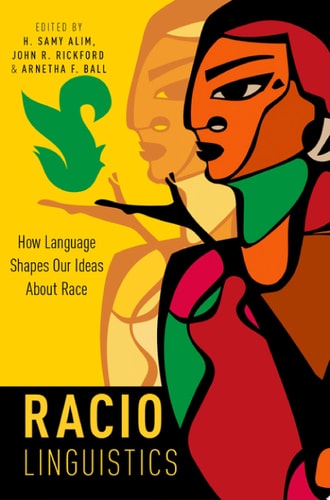
Raciolinguistics
0
0
As an Amazon Associate and affiliate partner, Menrva Books earns from qualifying purchases. Learn more
Author Description
Raciolinguistics Reveals The Central Role That Language Plays In Shaping Our Ideas About Race And Vice Versa. The Book Brings Together A Team Of Leading Scholars-working Both Within And Beyond The United States-to Share Powerful, Much-needed Research That Helps Us Understand The Increasingly Vexed Relationships Between Race, Ethnicity, And Language In Our Rapidly Changing World. Combining The Innovative, Cutting-edge Approaches Of Race And Ethnic Studies With Fine-grained Linguistic Analyses, Authors Cover A Wide Range Of Topics Including The Struggle Over The Very Term African American, The Racialized Language Education Debates Within The Increasing Number Of Majority-minority Immigrant Communities In The U.s., The Dangers Of Multicultural Education In A Europe That Is Struggling To Meet The Needs Of New Migrants, And The Sociopolitical And Cultural Meanings Of Linguistic Styles Used In Brazilian Favelas, South African Townships, Mexican And Puerto Rican Barrios In Chicago, And Korean American Cram Schools In New York City, Among Other Sites. Taking Into Account Rapidly Changing Demographics In The U.s And Shifting Cultural And Media Trends Across The Globe--from Hip Hop Cultures, To Transnational Mexican Popular And Street Cultures, To Israeli Reality Tv, To New Immigration Trends Across Africa And Europe--raciolinguistics Shapes The Future Of Scholarship On Race, Ethnicity, And Language. By Taking A Comparative Look Across A Diverse Range Of Language And Literacy Contexts, The Volume Seeks Not Only To Set The Research Agenda In This Burgeoning Area Of Study, But Also To Help Resolve Pressing Educational And Political Problems In Some Of The Most Contested Raciolinguistic Contexts In The World.
Menrva's Summary
THE THESIS
This volume investigates the complex, reciprocal relationship between language and race, arguing that linguistic practices are fundamental to the construction and maintenance of racial hierarchies. The editors, Arnetha F. Ball, H. Samy Alim, and John R. Rickford, assemble a diverse cohort of scholars to examine how language serves as a mechanism for racialization across global contexts. By integrating sociolinguistic methodology with critical race theory, the text provides a framework for analyzing how power dynamics are encoded in speech and literacy.
THE SCOPE MAP
What You Will Find
- Comparative analyses of linguistic styles in diverse settings including Brazilian favelas, South African townships, and U.S. urban centers.
- Examination of racialized language education debates within immigrant communities.
- Exploration of media and cultural trends, ranging from hip hop to transnational popular culture.
- Theoretical frameworks for understanding the intersection of ethnicity, race, and language.
Scope Limits
- The text does not provide a comprehensive history of all global linguistic developments.
- It focuses primarily on contemporary sociopolitical contexts rather than historical linguistic evolution.
THE AUTHORITY PERSPECTIVE
Experts identify this volume as a foundational text for the field of raciolinguistics, noting its rigorous interdisciplinary approach. Readers frequently highlight the academic density of the prose, which is intended for scholars and advanced students of linguistics and sociology.
Page Count:
360
Publication Date:
2016-01-01
Publisher:
Oxford University Press
ISBN-10:
0190625708
ISBN-13:
9780190625702
Ethnic Studies
Anthropology
Race Studies
Education
Community Tags
Similar Books