The Army Medical Department, 1917-1941
0
0
As an Amazon Associate and affiliate partner, Menrva Books earns from qualifying purchases. Learn more
Author Description
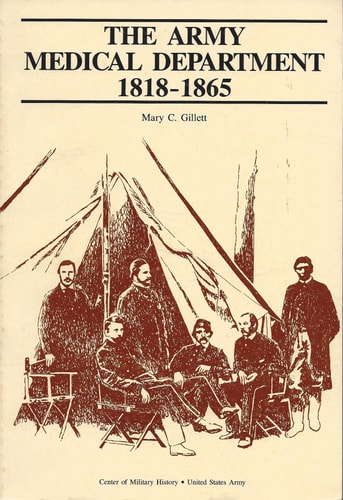
Mary Gillet authors a long-needed in-depth analysis of the department's struggle to maintain the health and fighting ability of the nation's soldiers during both World War I-a conflict of unexpected proportions and violence-and the years that preceded World War II. In 1917, unprepared as a result of the widespread conviction that to prepare for war is to encourage its outbreak, the Medical Department faced confusion exacerbated by a shortage of both equipment and trained personnel. While bringing to bear knowledge of disease and disease prevention gained in the years after the Spanish-American War, it redesigned and developed its approach to evacuation; struggled to limit the damage to health and effectiveness caused by poison gas, an unfamiliar and deadly weapon; worked to devise ways to limit the suffering and deaths from gas gangrene; began its research into the unique problems of aviators; and desperately tried but failed to control the 1918 influenza pandemic, leaving behind a mystery concerning this disease that is yet to be completely solved. As Gillett's volume reveals, budget cutting and the popular conviction that there would never be another war as horrible as World War I initially retarded all efforts by department leaders to organize for a major conflict during the interwar period. With the nation eased into accepting the likelihood of war by President Franklin D. Roosevelt, the Medical Department for the first time in its history was able to prepare, albeit to a limited degree, for war before the first gun was fired. In today's arena, The Army Medical Department, 1917-1941, has a far-reaching application for all officers responsible for the health of their soldiers.
Menrva's Summary
THE THESIS
The Army Medical Department faced immense challenges in maintaining soldier health and fighting capability across two world wars and the interwar period. The department grappled with unpreparedness, equipment shortages, and the novel threats of poison gas and unfamiliar diseases like gas gangrene during World War I. Despite efforts to control the 1918 influenza pandemic, its mystery remains. Post-war budget cuts and the belief that another major conflict was unlikely hindered preparations for World War II, though for the first time, the department was able to organize to some extent before hostilities began.
THE SCOPE MAP
- Analysis of the Army Medical Department's struggles during World War I.
- Examination of the department's efforts to manage unfamiliar threats like poison gas and gas gangrene.
- Discussion of the challenges in controlling the 1918 influenza pandemic.
- Exploration of the department's research into the health issues of aviators.
- Investigation into the impact of budget cuts and public sentiment on interwar preparedness.
- The department's limited preparations for World War II prior to the conflict's outbreak.
- Relevance of the historical analysis to contemporary military health officers.
THE AUTHORITY PERSPECTIVE
This volume offers a comprehensive examination of the Army Medical Department's critical role from 1917 to 1941. The author meticulously details the department's efforts to adapt to the unprecedented demands of World War I, including managing novel threats and disease outbreaks. The work further explores the challenges of maintaining readiness during the interwar period, highlighting the impact of fiscal constraints and prevailing public opinion. Its detailed analysis provides valuable insights into the evolution of military medicine and its application to modern challenges.
Page Count:
668
Publication Date:
2009-11-01
Publisher:
www.MilitaryBookshop.Companyuk
ISBN-10:
1780390521
ISBN-13:
9781780390529
Non-Fiction
History
Military History
MEDICAL History
Community Tags
Similar Books