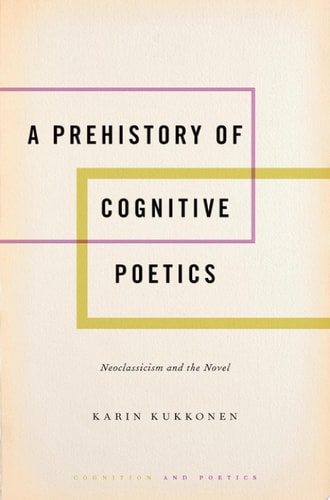
A Prehistory of Cognitive Poetics
0
0
As an Amazon Associate and affiliate partner, Menrva Books earns from qualifying purchases. Learn more
Author Description
This study provides an introduction to the neoclassical debates around how literature is shaped in concert with the thinking and feeling human mind. Three key rules of neoclassicism, namely, poetic justice (the rewards and punishments of characters in the plot), the unities (the coherence of the fictional world and its extensions through the imagination) and decorum (the inferential connections between characters and their likely actions), are reconsidered in light of social cognition, embodied cognition and probabilistic, predictive cognition. The meeting between neoclassical criticism and today's research psychology, neurology and philosophy of mind yields a new perspective for cognitive literary study. Neoclassicism has a crucial contribution to make to current debates around the role of literature in cultural and cognition. Literary critics writing at the time of the Scientific Revolution developed a perspective on literature the question of how literature engages minds and bodies as its central concern. A Prehistory of Cognitive Poetics traces the cognitive dimension of these critical debates in seventeenth- and eighteenth-century Britain and puts them into conversation with today's cognitive approaches to literature. Neoclassical theory is then connected to the praxis of eighteenth-century writers in a series of case studies that trace how these principles shaped the emerging narrative form of the novel. The continuing relevance of neoclassicism also shows itself in the rise of the novel, as A Prehistory of Cognitive Poetics illustrates through examples including Pamela, Tom Jones and the Gothic novel.
Menrva's Summary
THE THESIS
This study investigates how neoclassical literary theory from the seventeenth and eighteenth centuries anticipates and informs contemporary cognitive approaches to literature. Karin Kukkonen, a scholar specializing in cognitive literary studies, bridges the gap between historical criticism and modern research in psychology, neurology, and philosophy of mind. By re-examining core neoclassical principles, the author argues that early critics were already deeply engaged with the mechanisms of how literature interacts with human cognition, emotion, and embodied experience.
THE SCOPE MAP
What You Will Find
- Analysis of neoclassical rules: Poetic Justice, The Unities, and Decorum.
- Integration of social, embodied, and probabilistic predictive cognition frameworks.
- Case studies of eighteenth-century narrative forms, including Pamela, Tom Jones, and the Gothic novel.
Scope Limits
- The study focuses primarily on British literary history rather than a global survey of neoclassical thought.
- It does not provide a comprehensive history of the novel, but rather focuses on the cognitive implications of its early development.
THE AUTHORITY PERSPECTIVE
Scholars in the field recognize this work as a significant contribution to the intersection of cognitive science and literary history. Readers frequently note the academic density of the prose, which is best suited for those familiar with both literary theory and cognitive research methodologies.
Page Count:
240
Publication Date:
2017-01-01
Publisher:
Oxford University Press
ISBN-10:
0190634774
ISBN-13:
9780190634773
Philosophy of
Neoclassicism
Literary Criticism
Cognitive Poetics
Literature History
Community Tags
Similar Books