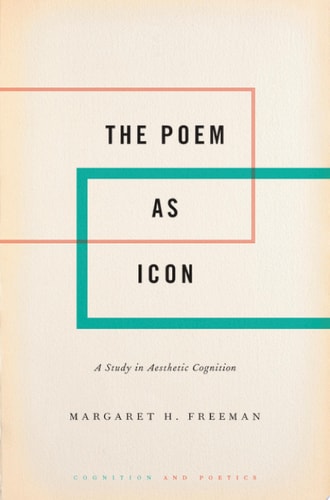
The Poem as Icon: A Study in Aesthetic Cognition
0
0
As an Amazon Associate and affiliate partner, Menrva Books earns from qualifying purchases. Learn more
Author Description
Poetry is the most complex and intricate of human language used across all languages and cultures. Its relation to the worlds of human experience has perplexed writers and readers for centuries, as has the question of evaluation and judgment: what makes a poem "work" and endure. The Poem as Icon focuses on the art of poetry to explore its nature and function: not interpretation but experience; not what poetry means but what it does. Using both historic and contemporary approaches of embodied cognition from various disciplines, Margaret Freeman argues that a poem's success lies in its ability to become an icon of the felt "being" of reality.Freeman explains how the features of semblance, metaphor, schema, and affect work to make a poem an icon, with detailed examples from various poets. By analyzing the ways poetry provides insights into the workings of human cognition, Freeman claims that taste, beauty, and pleasure in the arts are simply products of the aesthetic faculty, and not the aesthetic faculty itself. The aesthetic faculty, she argues, should be understood as the science of human perception, and therefore constitutive of the cognitive processes of attention, imagination, memory, discrimination, expertise, and judgment.
Menrva's Summary
THE THESIS
This book investigates the fundamental question of how poetry functions as an aesthetic object that mirrors the felt experience of reality. Margaret H. Freeman, a scholar in the field of cognitive poetics, synthesizes historical literary theory with contemporary research in embodied cognition. She posits that a poem's efficacy is derived from its capacity to act as an icon, engaging the reader's cognitive faculties to simulate the being of reality rather than merely conveying semantic meaning.
THE SCOPE MAP
What You Will Find
- Analysis of cognitive mechanisms including schema, metaphor, and affect
- Theoretical framework linking aesthetic experience to the science of human perception
- Examination of the aesthetic faculty as a component of attention, memory, and judgment
Scope Limits
- Does not provide a comprehensive history of poetic movements
- Does not offer a manual for creative writing or poetic composition
THE AUTHORITY PERSPECTIVE
Scholars and students of cognitive poetics recognize this work as a significant contribution to the intersection of linguistics and literary analysis. Readers frequently note the academic density of the prose, which requires a foundational understanding of cognitive science terminology to fully grasp the author's arguments.
Page Count:
221
Publication Date:
2020-01-01
Publisher:
Oxford University Press
ISBN-10:
0190080434
ISBN-13:
9780190080433
Philosophy
Cognitive
Aesthetics
English
New Used & Rental Textbooks
Criticism & Theory
Literary Criticism
English & College Success
Poetics
Philosophy of
Cognitive Poetics
Mind & Body
Community Tags
Other Editions(2)
Similar Books