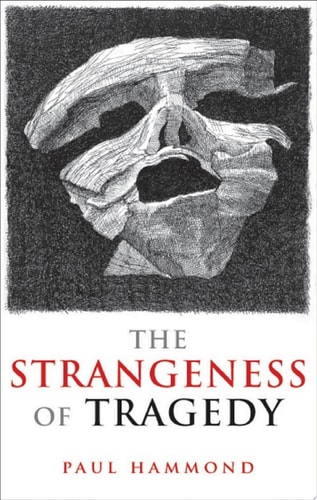
The Strangeness of Tragedy
0
0
As an Amazon Associate and affiliate partner, Menrva Books earns from qualifying purchases. Learn more
Author Description
This book reads tragedy as a genre in which the protagonist is estranged from the world around him, and, displaced in time, space, and language, comes to inhabit a milieu which is no longer shared by other characters. This alienation from others also entails a decomposition of the integrity of the individual, which is often seen in tragedy's uncertainty about the protagonists' autonomy: do they act, or do the gods act through them? Where are the boundaries of the self, and the boundaries of the human? After an introductory essay exploring the theatrical and linguistic means by which the protagonist is made to inhabit a strange and singular world, the book devotes essays to plays from classical, renaissance, and neo-classical literature by Aeschylus, Sophocles, Seneca, Shakespeare, and Racine. Close attention is paid to the linguistic strangeness of the texts which is often smoothed over by editors and translators, as it is through the weirdness of tragic language that the deep estrangement of the characters is shown. Accordingly, the Greek, Latin, and French texts are quoted in the originals, with translations added, and attention is paid to textual cruces which illustrate the linguistic and conceptual difficulties of these plays.
Menrva's Summary
THE THESIS
This book investigates the nature of tragedy as a genre defined by the protagonist's profound estrangement from their environment and the subsequent dissolution of individual autonomy. Prof. Paul Hammond utilizes his expertise in literary history to argue that the tragic experience is fundamentally rooted in a character's displacement across time, space, and language. By examining the linguistic and theatrical mechanisms of alienation, the author challenges traditional interpretations of character agency and the boundaries of the human self.
THE SCOPE MAP
What You Will Find
- Analysis of tragic works by Aeschylus, Sophocles, Seneca, Shakespeare, and Racine.
- Examination of linguistic anomalies and textual cruces in original Greek, Latin, and French.
- A theoretical framework linking character isolation to the decomposition of individual integrity.
Scope Limits
- The study does not cover modern or contemporary tragic drama.
- It does not provide a comprehensive history of the genre, focusing instead on specific thematic instances of strangeness.
THE AUTHORITY PERSPECTIVE
Scholars and students of classical and early modern drama frequently note the academic density and rigorous linguistic focus of the prose. Experts highlight this work as a significant contribution to the study of tragic form, particularly for its insistence on engaging with original texts rather than smoothed-over translations.
Page Count:
216
Publication Date:
2009-01-01
Publisher:
OUP Oxford
ISBN-10:
0191610194
ISBN-13:
9780191610196
Tragic The
Literary Criticism
Special Topics
Philosophy of
Drama Theory
Tragedy
Renaissance
Theatre
Humanities
Community Tags
Similar Books