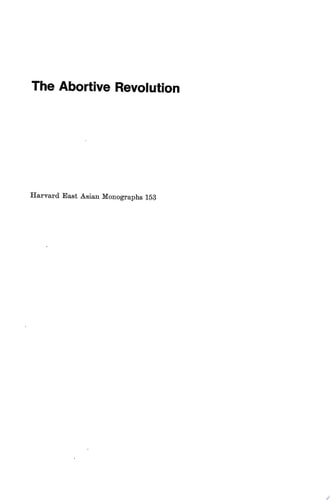
The Abortive Revolution: China Under Nationalist Rule, 1927–1937
0
0
As an Amazon Associate and affiliate partner, Menrva Books earns from qualifying purchases. Learn more
Author Description
An in-depth investigation of selected aspects of Chinese history during the Nanking Decade, illuminating the forces that prevented the re-creation of national unity and vitality under Chiang Kai-shek and the Kuomintang nationalists.
Menrva's Summary
THE THESIS
The Nanking Decade represented a critical juncture for China, yet internal divisions and external pressures prevented the Kuomintang from achieving national unity and revitalization. Lloyd E. Eastman's work meticulously examines the multifaceted challenges faced by Chiang Kai-shek's government between 1927 and 1937. The book delves into the selected aspects of Chinese history during this period, highlighting the persistent forces that undermined the Nationalist regime's efforts to forge a cohesive and dynamic nation. Eastman's analysis is grounded in a deep understanding of the political, social, and economic landscape of the time, revealing the complex interplay of factors that led to the revolution's ultimate failure to fully consolidate power.
THE SCOPE MAP
- An in-depth investigation of selected aspects of Chinese history during the Nanking Decade (1927-1937).
- Illumination of the forces that prevented the re-creation of national unity and vitality under Chiang Kai-shek and the Kuomintang nationalists.
- Analysis of the political, social, and economic challenges confronting Nationalist China.
- Examination of the internal divisions and external pressures that hampered the regime's consolidation of power.
THE AUTHORITY PERSPECTIVE
Lloyd E. Eastman's "The Abortive Revolution" is recognized for its scholarly depth in analyzing the complexities of China under Nationalist rule. The book is noted for its detailed examination of the factors that hindered the Kuomintang's efforts to unify the nation during the Nanking Decade. Scholars and students of Chinese history utilize this work to understand the persistent internal and external challenges that defined this pivotal period. The analysis provides a critical perspective on the limitations and eventual failures of the Nationalist government's attempts at modernization and consolidation.
Page Count:
432
Publication Date:
2020-03-17
Publisher:
BRILL
ISBN-10:
1684172926
ISBN-13:
9781684172924
Politics
History
Non-Fiction
Nationalism
Asian History
Chinese History
Political History
Community Tags
Similar Books