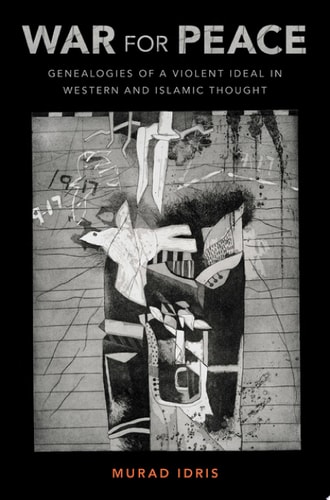
War for Peace
0
0
As an Amazon Associate and affiliate partner, Menrva Books earns from qualifying purchases. Learn more
Author Description
Peace Is A Universal Ideal, But Its Political Life Is A Great Paradox: Peace Is The Opposite Of War, But It Also Enables War. If Peace Is The Elimination Of War, Then What Does It Mean To Wage War For The Sake Of Peace? What Does Peace Mean When Some Say That They Are Committed To It But That Their Enemies Do Not Value It? Why Is It That Associating Peace With Other Ideals, Like Justice, Friendship, Security, And Law, Does Little To Distance Peace From War? Although Political Theory Has Dealt Extensively With Most Major Concepts That Today Define The Political It Has Paid Relatively Scant Critical Attention To Peace, The Very Concept That Is Often Said To Be The Major Aim And Ideal Of Humanity. In War For Peace, Murad Idris Looks At The Ways That Peace Has Been Treated Across The Writings Of Ten Thinkers From Ancient And Modern Political Thought, From Plato To Immanuel Kant And Sayyid Qutb, To Produce An Original And Striking Account Of What Peace Means And How It Works. Idris Argues That Peace Is Parasitical In That The Addition Of Other Ideals Into Peace, Such As Law, Security, And Friendship, Reduces It To Consensus And Actually Facilitates War; It Is Provincial In That Its Universalized Content Reflects Particularistic Desires And Fears, Constructions Of Difference, And Hierarchies Within Humanity; And It Is Polemical, In That Its Idealization Is Not Only The Product Of Antagonisms, But Also Enables Hostility. War For Peace Uncovers The Basis Of Peace's Moralities And The Political Functions Of Its Idealizations, Historically And Into The Present. This Bold And Ambitious Book Confronts Readers With The Impurity Of Peace As An Ideal, And The Pressing Need To Think Beyond Universal Peace.
Menrva's Summary
THE THESIS
This book investigates the inherent paradox of peace as a political concept, questioning how an ideal ostensibly opposed to conflict frequently functions to enable or justify war. Murad Idris, a scholar of political theory, examines the historical and conceptual evolution of peace by analyzing the works of ten influential thinkers ranging from Plato to Immanuel Kant and Sayyid Qutb. He argues that peace is often treated as a parasitic, provincial, and polemical construct that reduces complex political realities to consensus while reinforcing hierarchies and facilitating hostility.
THE SCOPE MAP
What You Will Find
- A comparative analysis of ten major thinkers in political philosophy.
- A theoretical framework identifying peace as parasitic, provincial, and polemical.
- An exploration of the intersection between peace and concepts like justice, security, and law.
Scope Limits
- The text does not provide a comprehensive history of every major peace movement or treaty.
- It does not offer a prescriptive guide for achieving global stability or conflict resolution.
THE AUTHORITY PERSPECTIVE
Scholars and political theorists recognize this work as a rigorous critique of the conceptual foundations of peace in Western and non-Western political thought. Readers frequently note the academic density of the prose and the challenging nature of the author's deconstruction of traditional political ideals.
Page Count:
304
Publication Date:
2018-01-01
Publisher:
Oxford University Press
ISBN-10:
0190658029
ISBN-13:
9780190658021
Philosophy
Political Theory
History of Ideas
International relations
Community Tags
Other Editions(2)
Similar Books