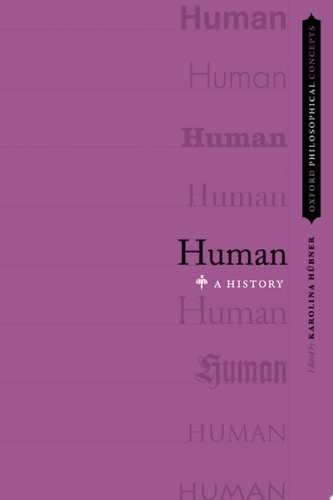
Human: A History
0
0
As an Amazon Associate and affiliate partner, Menrva Books earns from qualifying purchases. Learn more
Author Description
What does it mean to be human? Is there something that makes us distinct from computers, other great apes, Martians, gods? Is there philosophical, ethical, or political value in continuing to think in terms of a common human nature? Or should we rather throw this concept into the dustbin of history?A paradox of the concept of "human nature" is that it holds both the promise of universal equality--insofar as it takes us all to share a common nature--while all too often rationalizing exploitation, oppression, and even violence against other individuals and other species. Most appallingly, differences in skin color and other physiological traits have been viewed as signs of a "lesser" humanity, or of outright inhumanity, and used to justify great harms. The volume asks: is the concept of human nature separable from the racist, sexist, and speciest abuse that has been made of it? And is it even possible--or desirable--to articulate a notion of human nature unaffected by race or gender or class, as if it were possible to observe humanity in a pure form?This volume traces the history of the concept "human" by examining the history of claims about distinctively human properties and capacities, and the ethical and politicalrepercussions of such accounts. Spanning the history of philosophy, political science, religion, medical ethics, the history of art and science fiction, it illuminates how our self-understanding as "human" evolved across time and place--from ancient Greek, classical Chinese, and medieval Arabic accounts of human nature to contemporary evolutionary theory and the transhumanist movement. It examines problems ranging from the intelligibility of Incarnation (a relationship between divine and human beings) to problems posed by genetic engineering and artificial intelligence. Short pieces, or Reflections, are interspersed among the chapters, which take up topics ranging from Frankenstein to Marx's concept of human nature.
Menrva's Summary
THE THESIS
This volume investigates whether the concept of human nature remains a viable or ethical framework for understanding our species, or if it is inherently tied to historical patterns of oppression. Editor Karolina Hubner, alongside a collection of contributors, examines the evolution of the term "human" across diverse intellectual traditions. By analyzing claims about distinctively human properties, the text evaluates the ethical and political consequences of defining humanity in ways that have historically excluded or marginalized specific groups.
THE SCOPE MAP
What You Will Find
- Historical analysis of human nature from ancient Greek, classical Chinese, and medieval Arabic perspectives.
- Examination of contemporary issues including transhumanism, artificial intelligence, and genetic engineering.
- Interdisciplinary synthesis of philosophy, political science, religion, and art history.
- Short "Reflections" pieces analyzing specific cultural touchstones like Frankenstein and Marxist theory.
Scope Limits
- The text does not provide a singular, definitive definition of human nature.
- It does not offer a comprehensive biological manual for human evolution.
THE AUTHORITY PERSPECTIVE
Experts identify this volume as a sophisticated contribution to the Oxford Philosophical Concepts series, noting its breadth in bridging historical philosophy with modern technological dilemmas. Readers frequently highlight the accessibility of the "Reflections" sections as a useful counterpoint to the more dense, theoretical chapters.
Page Count:
460
Publication Date:
2022-03-04
Publisher:
Oxford University Press
ISBN-10:
0190876379
ISBN-13:
9780190876371
Philosophy
History of Ideas
Anthropology
Ethics
Community Tags
Similar Books