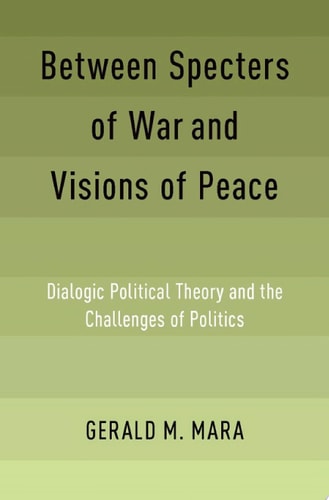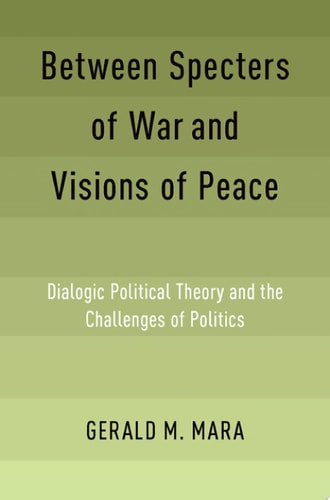
Between Specters of War and Visions of Peace
0
0
As an Amazon Associate and affiliate partner, Menrva Books earns from qualifying purchases. Learn more
Author Description
Since The Beginning Of The Twenty-first Century, Recurring Political Violence At Both State And Non-state Levels Has Eroded Confidence In The Progressively Peaceful Character Of International Relations, And Has Unsettled The Parameters Of Political Thought. Frames Of Peace And Frames Of War Have, Throughout Western Thought, Colored The Questions That We Ask About Politics, The Descriptions Of The Pragmatic And Moral Alternatives That We Face, And The Ideas And Metaphors That We Use At Any Given Moment. These Frames, As This Book Argues, Also Obscure Too Much Of Political Life. Gerald M. Mara Proposes, Instead, A Political Philosophy That Takes Both War And Peace Seriously, And A Style Of Theory Committed To Questioning Rather Than Closure. He Challenges Two Powerful Currents In Contemporary Political Philosophy: The Verdict That Premodern Or Metaphysical Texts Cannot Speak To Modern And Postmodern Societies And The Insistence That All Forms Of Political Theory Be Some Form Of Democratic Theory. Mara Reexamines Seminal Texts In The History Of Political Theory, From Thucydides To Jacques Derrida, And From Machiavelli To Judith Butler, To Examine How Frames Of Reference Of War And Peace Have Structured Both The Writing Of These Texts, As Well As Interpretations Of Them. The Result Is Not A Linear History Of Ideas, But A Series Of Conversations Between Them, And A Democratic Justification For Moving Beyond Democratic Theory.
Menrva's Summary
THE THESIS
This book investigates how the binary framing of war and peace has constrained political thought and proposes a new philosophical approach that embraces ambiguity over closure. Gerald M. Mara, a scholar of political theory, utilizes a critical analysis of canonical texts to demonstrate how these rigid frames obscure the complexities of modern political life. He argues for a style of theory that questions established paradigms rather than seeking definitive answers, ultimately advocating for a democratic justification that transcends traditional democratic theory.
THE SCOPE MAP
What You Will Find
- A comparative analysis of political texts ranging from Thucydides to Jacques Derrida.
- A critique of the dismissal of premodern and metaphysical texts in contemporary discourse.
- A methodological framework for interpreting political theory as a series of ongoing conversations.
Scope Limits
- The book does not provide a linear historical account of political ideas.
- It does not offer a singular, prescriptive model for democratic governance.
THE AUTHORITY PERSPECTIVE
Scholars recognize this work as a sophisticated intervention in the field of political philosophy that challenges the limitations of contemporary theoretical frameworks. Readers frequently note the academic density of the prose, which requires a strong background in political theory to fully engage with the author's arguments.
Page Count:
288
Publication Date:
2019-01-01
Publisher:
Oxford University Press
ISBN-10:
0190903929
ISBN-13:
9780190903923
International relations
Political Philosophy
Political Theory
History of Ideas
Community Tags
Similar Books