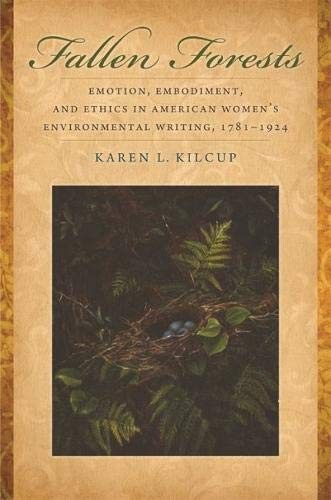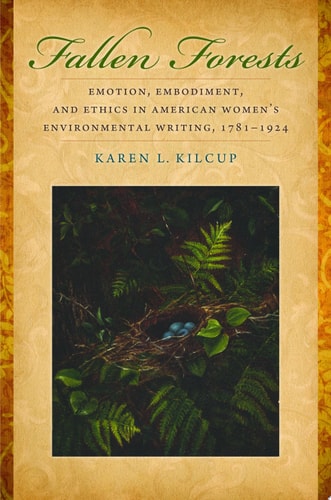
Fallen Forests: Emotion, Embodiment, and Ethics in American Women's Environmental Writing, 1781-1924
0
0
As an Amazon Associate and affiliate partner, Menrva Books earns from qualifying purchases. Learn more
Author Description
In 1844, Lydia Sigourney asserted, "Man's warfare on the trees is terrible." Like Sigourney many American women of her day engaged with such issues as sustainability, resource wars, globalization, voluntary simplicity, Christian ecology, and environmental justice. Illuminating the foundations for contemporary women's environmental writing, Fallen Forests shows how their nineteenth-century predecessors marshaled powerful affective, ethical, and spiritual resources to chastise, educate, and motivate readers to engage in positive social change. Fallen Forests contributes to scholarship in American women's writing, ecofeminism, ecocriticism, and feminist rhetoric, expanding the literary, historical, and theoretical grounds for some of today's most pressing environmental debates. Karen L. Kilcup rejects prior critical emphases on sentimentalism to show how women writers have drawn on their literary emotional intelligence to raise readers' consciousness about social and environmental issues. She also critiques ecocriticism's idealizing tendency, which has elided women's complicity in agendas that depart from today's environmental orthodoxies. Unlike previous ecocritical works, Fallen Forests includes marginalized texts by African American, Native American, Mexican American, working-class, and non-Protestant women. Kilcup also enlarges ecocriticism's genre foundations, showing how Cherokee oratory, travel writing, slave narrative, diary, polemic, sketches, novels, poetry, and expos intervene in important environmental debates.
Menrva's Summary
THE THESIS
This book investigates the foundational role American women writers played in shaping environmental discourse from the late 18th to the early 20th centuries. Karen L. Kilcup, a scholar in American women's writing and ecocriticism, examines how writers like Lydia Sigourney engaged with critical issues such as sustainability, resource management, and environmental justice. The book analyzes how these women utilized affective, ethical, and spiritual resources to advocate for social and environmental change, challenging prior critical interpretations that focused solely on sentimentalism. Kilcup also critiques the tendency within ecocriticism to idealize environmental movements and includes marginalized voices and diverse literary forms to broaden the scope of environmental literary studies.
THE SCOPE MAP
- Analysis of American women's environmental writing from 1781 to 1924.
- Exploration of themes including sustainability, resource wars, globalization, voluntary simplicity, Christian ecology, and environmental justice.
- Rejection of prior critical emphases on sentimentalism to highlight women's literary emotional intelligence in raising consciousness about social and environmental issues.
- Critique of ecocriticism's idealizing tendencies and elision of women's complicity in non-orthodox environmental agendas.
- Inclusion of marginalized texts by African American, Native American, Mexican American, working-class, and non-Protestant women.
- Expansion of ecocriticism's genre foundations to include Cherokee oratory, travel writing, slave narrative, diary, polemic, sketches, novels, and poetry.
- Contribution to scholarship in American women's writing, ecofeminism, ecocriticism, and feminist rhetoric.
THE AUTHORITY PERSPECTIVE
The book contributes significantly to scholarship in American women's writing, ecofeminism, ecocriticism, and feminist rhetoric by expanding the literary, historical, and theoretical grounds for contemporary environmental debates. It challenges previous critical approaches by highlighting the powerful affective, ethical, and spiritual resources employed by women writers. The work is noted for its inclusion of marginalized texts and diverse genres, offering a more comprehensive view of early American environmental discourse. By examining how women writers marshaled their literary emotional intelligence, the book provides a nuanced understanding of their engagement with social and environmental issues.
Page Count:
512
Publication Date:
2013-05-01
Publisher:
University of Georgia Press
ISBN-10:
0820345008
ISBN-13:
9780820345000
Non-Fiction
Literary Fiction
History
Ecocriticism
Literary Criticism
American
Community Tags
Similar Books