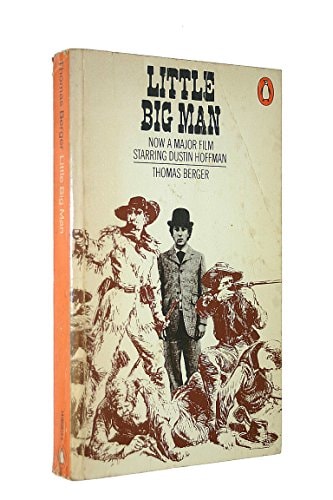
Little Big Man
0
0
As an Amazon Associate and affiliate partner, Menrva Books earns from qualifying purchases. Learn more
Author Description
"I am a white man and never forget it, but I was brought up by the Cheyenne Indians from the age of ten." So starts the story of Jack Crabb, the 111-year old narrator of Thomas Berger's masterpiece of American fiction. As a "human being", as the Cheyenne called their own, he won the name Little Big Man. He dressed in skins, feasted on dog, loved four wives and saw his people butchered by the horse soldiers of General Custer, the man he had sworn to kill.As a white man, Crabb hunted buffalo, tangled with Wyatt Earp, cheated Wild Bill Hickok and survived the Battle of Little Bighorn. Part-farcical, part-historical, the picaresque adventures of this witty, wily mythomaniac claimed the Wild West as the stuff of serious literature.
Menrva's Summary
THE PULSE
Jack Crabb, a 111-year-old survivor of the American frontier, recounts his life as a white man raised by the Cheyenne and his subsequent encounters with legendary figures of the Wild West. Crabb navigates a shifting identity, oscillating between his upbringing as a Cheyenne warrior and his life among white settlers. His objective is survival and the preservation of his own history, while he faces the violent expansionism of the United States military and the chaotic social landscape of the nineteenth-century frontier. The narrative framework is a first-person oral history, presented as a series of recollections that challenge the traditional myths of the American West. Crabb must contend with the physical dangers of warfare and the logical contradictions of a society that views him as both an outsider and a participant in its most defining conflicts.
INSIDE THE PAGES
- First-person retrospective narration
- Picaresque structural elements
- Satirical treatment of historical figures
- Juxtaposition of Cheyenne and white cultural values
- Episodic narrative pacing
- Inclusion of legendary Western icons like Wyatt Earp and Wild Bill Hickok
- Detailed depiction of the Battle of Little Bighorn
- Exploration of the myth-making process in American history
THE COLLECTIVE ECHO
Readers and critics frequently highlight the novel's effectiveness in deconstructing the romanticized myths of the American frontier through a lens of dark humor and irony. Discussion often centers on the protagonist's unreliable nature, which serves to emphasize the absurdity of the historical events he describes. The balance between the harsh realities of the Indian Wars and the farcical encounters with Western legends creates a unique atmosphere that keeps the narrative engaging. Many observers note that the prose maintains a sharp, witty tone that prevents the story from becoming overly sentimental despite the tragic subject matter. The work is widely regarded as a significant contribution to the genre for its ability to blend historical accuracy with a cynical, modern perspective on the American experience.
Page Count:
440
Publication Date:
1971-03-01
Publisher:
Penguin Books Ltd
ISBN-10:
0140028196
ISBN-13:
9780140028195
Fiction
Historical Fiction
Adventure
History
Western
Satire
Literary
American
Westerns
Picaresque
Genre Fiction