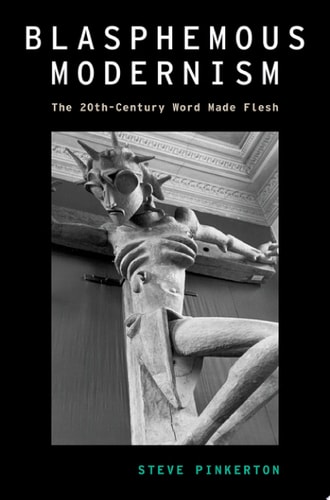
Blasphemous Modernism: The 20th-Century Word Made Flesh
0
0
As an Amazon Associate and affiliate partner, Menrva Books earns from qualifying purchases. Learn more
Author Description
Scholars have long described modernism as "heretical" or "iconoclastic" in its assaults on secular traditions of form, genre, and decorum. Yet critics have paid surprisingly little attention to the related category of blasphemy--the rhetoric of religious offense--and to the specific ways this rhetoric operates in, and as, literary modernism. United by a shared commitment to "the word made flesh," writers such as James Joyce, Mina Loy, Richard Bruce Nugent, and Djuna Barnes made blasphemy a key component of their modernist practice, profaning the very scriptures and sacraments that fueled their art. In doing so they belied T. S. Eliot's verdict that the forces of secularization had rendered blasphemy obsolete in an increasingly godless century ("a world in which blasphemy is impossible"); their poems and fictions reveal how forcefully religion endured as a cultural force after the Death of God. More, their transgressions spotlight a politics of religion that has seldom engaged the attention of modernist studies. Blasphemy respects no division of church and state, and neither do the writers who wield it to profane all manner of coercive dogmas--including ecclesiastical as well as more worldly ideologies of race, class, nation, empire, gender, and sexuality. The late-century example of Salman Rushdie's The Satanic Verses affords, finally, a demonstration of how modernism persists in postwar anglophone literature and of the critical role blasphemy plays in that persistence. Blasphemous Modernism thus resonates with the broader cultural and ideological concerns that in recent years have enriched the scope of modernist scholarship.
Menrva's Summary
THE THESIS
This book investigates how the rhetoric of blasphemy functions as a central, deliberate component of literary modernism, challenging the assumption that secularization rendered religious offense obsolete. Steve Pinkerton, a scholar of modernist literature, examines how writers utilized the concept of the "word made flesh" to engage with and subvert both ecclesiastical and secular dogmas. By analyzing the works of authors like James Joyce and Djuna Barnes, the text argues that religion remained a potent cultural force throughout the 20th century, serving as a critical site for political and social critique.
THE SCOPE MAP
What You Will Find
- Analysis of modernist authors including James Joyce, Mina Loy, Richard Bruce Nugent, and Djuna Barnes
- Examination of the intersection between religious rhetoric and ideologies of race, class, and gender
- Discussion of the legacy of modernist blasphemy in postwar literature, specifically Salman Rushdie's The Satanic Verses
Scope Limits
- The text does not provide a comprehensive history of religious theology outside of its specific application to modernist literary practice
- The analysis is primarily focused on anglophone literature rather than a global survey of all modernist movements
THE AUTHORITY PERSPECTIVE
Scholars identify this work as a significant contribution to the evolving field of modernist studies, particularly regarding the intersection of religion and secularization. Readers frequently note the academic rigor of the prose and its success in expanding the ideological scope of traditional modernist scholarship.
Page Count:
200
Publication Date:
2017-01-01
Publisher:
Oxford University Press
ISBN-10:
019065144X
ISBN-13:
9780190651442
Religion
Literary Criticism
20th Century
Special Topics
English & College Success
English
Modernism
Cultural History
Modernism aesthetics
Community Tags
Similar Books