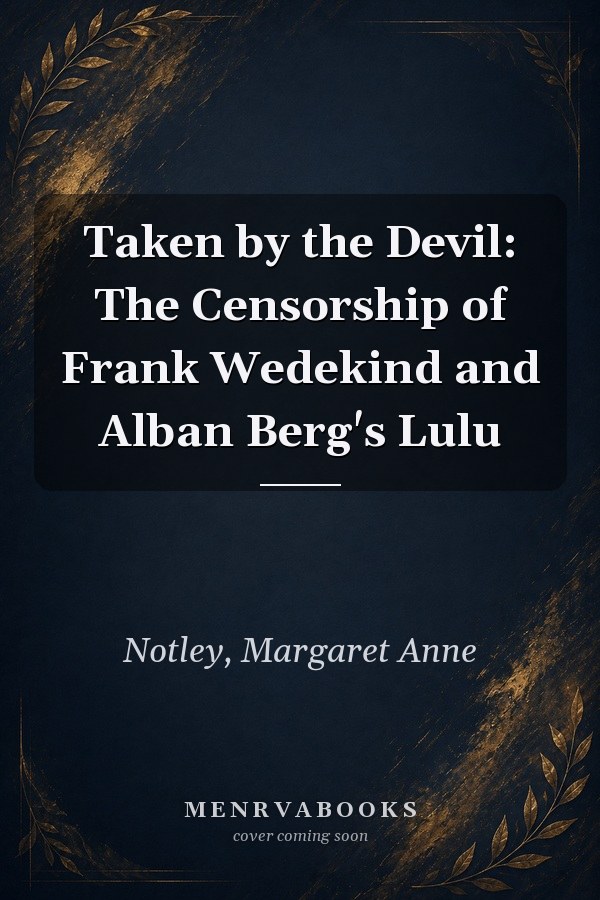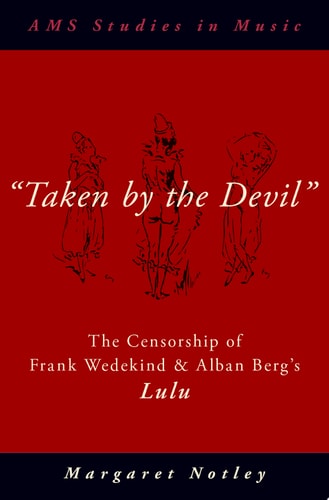
Taken By The Devil
0
0
As an Amazon Associate and affiliate partner, Menrva Books earns from qualifying purchases. Learn more
Author Description
Censorship Had An Extraordinary Impact On Alban Berg's Opera Lulu, Composed By The Austrian During The Politically Tumultuous Years Spanning 1929 To 1935. Based On Plays By Frank Wedekind That Were Repeatedly Banned From Being Published And Performed From 1894 Until The End Of World War I, The Libretto Was In Turn Censored By Berg Himself When He Characterized It As A Morality Play After Submitting It To Authorities In Nazi Germany In 1934. After Berg Died The Next Year, The Third Act Was Censored By His Widow, Helene, And His Former Teacher, Arnold Schoenberg. In Taken By The Devil, Author Margaret Notley Uncovers The Unusual And Uniquely Generative Role Of Censorship Throughout The Lifecycle Of Berg's Great Opera. Placing The Opera And Its Source Material In Wider Cultural Contexts, Notley Provides Close Readings Of The Opera's Libretto And Score To Reveal Techniques Employed By The Composer And By Wedekind Before Him In Negotiating Censorship. She Also Explores Ways In Which Berg Chose To Augment Discrepancies Between The Plays Rather Than Flatten Them As In Certain Performances Of The Plays During The 1920s, Adding Further Dimensions Of Interpretation To The Work. Elegantly Readable, Taken By The Devil Is One Of The Most Meticulously Researched And Nuanced Studies Of Lulu To Date, And Illuminates The Process Of Politically-driven Censorship Of Theater, Music, And The Arts During The Tumultuous Early Twentieth Century.
Menrva's Summary
THE THESIS
How did the pervasive influence of political and social censorship shape the composition, reception, and final form of Alban Berg's opera Lulu? Margaret Notley, a scholar of early twentieth-century music, examines the complex history of Berg's final opera against the backdrop of the politically volatile years between 1929 and 1935. By analyzing the intersection of Frank Wedekind's original plays and Berg's own editorial choices, Notley argues that censorship acted as a uniquely generative force rather than a purely restrictive one. The work utilizes archival research and musical analysis to demonstrate how Berg navigated the pressures of Nazi-era authorities and personal interventions by his contemporaries.
THE SCOPE MAP
What You Will Find
- Historical analysis of the censorship of Frank Wedekind's plays from 1894 through the end of World War I.
- Detailed examination of the libretto and score of Lulu, focusing on Berg's strategic modifications.
- Investigation into the post-mortem editorial decisions made by Helene Berg and Arnold Schoenberg regarding the opera's third act.
Scope Limits
- The study focuses primarily on the specific case of Lulu and does not provide a comprehensive history of all operatic censorship in the twentieth century.
- The analysis is limited to the specific cultural and political climate of Germany and Austria during the 1920s and 1930s.
THE AUTHORITY PERSPECTIVE
Scholars and musicologists frequently cite this work for its meticulous archival research and its nuanced approach to the intersection of political history and musical composition. Readers often note the academic density of the prose, which provides a rigorous examination of the creative compromises inherent in the production of high art under authoritarian regimes.
Page Count:
304
Publication Date:
2019-01-01
Publisher:
Oxford University Press
ISBN-10:
0190069872
ISBN-13:
9780190069872
Biography
Opera
Censorship Studies
Musicology
20th Century
Cultural History
Community Tags
Similar Books