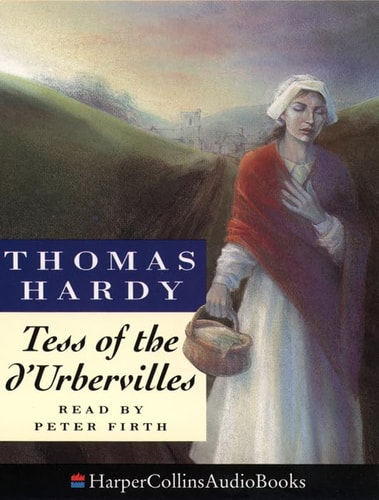
Tess of the D'Urbervilles
0
0
As an Amazon Associate and affiliate partner, Menrva Books earns from qualifying purchases. Learn more
Author Description
Hardy's novel tells the story of how John and Joan Durbeyfield became convinced that they are descended from the ancient family of d'Ubervilles. They encourage their daughter Tess to cement a connection with the Stoke-d'Uberville family of local gentry (who it turns out are themselves not entitled to the illustrious name) and she is raped by their son, the unprincipled Alec. It is a connection that returns to haunt her after she has married the pure parson's son Angel Clare.Tess first appeared in a serialized—and bowdlerized—form in The Graphic in 1891. A Pure Woman Faithfully Presented, as Hardy subtitled the work, represented a direct challenge to conventional notions of sexuality and femininity—and, though conventions have radically changed in the past century, the character of Tess has remained a challenging one. In her introduction Maier argues that we should not see Tess merely as a passive victim; she suggests that a combination of sexual vigour and moral rigour makes Tess not just one of the greatest but also one of the strongest women in the canon of English literature.
Menrva's Summary
THE PULSE
The discovery of a noble lineage sets in motion a tragic sequence of events that forces a young woman to confront the rigid moral hypocrisies of her society. Tess Durbeyfield, a resilient young woman, finds her life irrevocably altered when her impoverished parents send her to claim kinship with a wealthy, unrelated family. Her subsequent exploitation by Alec d'Urberville and her later marriage to the idealistic Angel Clare create a conflict between her personal integrity and the unforgiving social expectations of the era. The narrative, presented with a somber and observant tone, tracks Tess's struggle to reconcile her own moral purity with the labels imposed upon her by a judgmental community.
INSIDE THE PAGES
- Detailed exploration of the restrictive social hierarchies of rural Victorian England
- Use of pastoral settings to contrast with the harsh realities of the protagonist's life
- Examination of the double standards regarding female sexuality and moral virtue
- Incorporation of fatalistic themes that suggest the inevitability of the protagonist's decline
- Critique of religious hypocrisy and the failure of traditional institutions to provide support
- Complex characterization of the protagonist as both a victim of circumstance and a figure of moral strength
- Stylistic focus on the tension between natural law and human-made social conventions
- Narrative structure that emphasizes the weight of the past on the present
THE COLLECTIVE ECHO
Since its initial publication in 1891, this novel has remained a central subject of critical debate regarding its portrayal of gender and morality. Readers and scholars frequently analyze the author's subtitle, which frames the protagonist as a pure woman despite the social stigma she endures throughout the narrative. The work is widely recognized for its unflinching look at the consequences of Victorian social rigidity and the vulnerability of those caught within its structures. Contemporary discussions often focus on the agency of the protagonist, moving away from viewing her solely as a passive victim of her environment. The enduring nature of the text lies in its ability to provoke ongoing questions about justice, societal judgment, and the definition of moral character.
Page Count:
0
Publication Date:
1993-01-01
Publisher:
HarperCollins UK
ISBN-10:
0001046810
ISBN-13:
9780001046818
Literature & Fiction
British & Irish
Tragedy
Classics
Victorian
Historical
Literary
classic