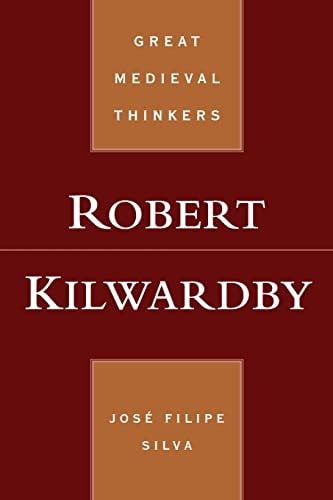
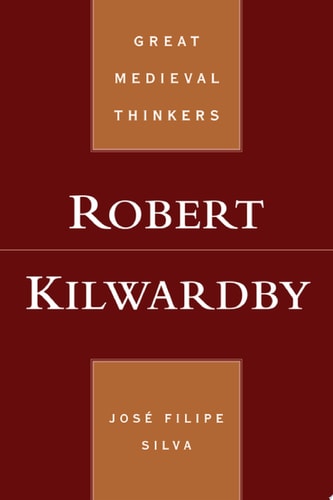
Robert Kilwardby
0
0
As an Amazon Associate and affiliate partner, Menrva Books earns from qualifying purchases. Learn more
Author Description
Archbishop of Canterbury from 1272 until his death in 1279, the Dominican friar Robert Kildwardby has long been known primarily for his participation in the Oxford Prohibitions of 1277, but his contributions spread far wider. A central figure in the Late Middle Ages, Kilwardby was one of the earliest commentators of the work of Aristotle, as well as an unwavering proponent of Augustinian thought and a believer of the plurality of forms. Although he was a prominent thinker of the time, key areas of his philosophical thought remain unexamined in contemporary scholarship.José Filipe Silva here offers the first book-length analysis of Kilwardby's full body of work, which is essential in understanding both the reception of Aristotle in the Latin West and the developments of later medieval philosophy. Beginning with his early philosophical commitments, Silva tracks Kilwardby's life and academic thought, including his theories on knowledge, moral happiness, and the nature of the soul, along with his attempts to reconcile Augustinian and Aristotelian thought. Ultimately, Robert Kilwardby offers a comprehensive overview of an unsung scholar, solidifying his philosophical legacy as one of the most influential authors of the Late Middle Ages.
Menrva's Summary
THE THESIS
This book investigates the philosophical contributions of Robert Kilwardby, a pivotal 13th-century Dominican friar and Archbishop of Canterbury, to determine his influence on the integration of Aristotelian and Augustinian thought. Author José Filipe Silva, a specialist in medieval philosophy, utilizes primary source texts and historical records to reconstruct Kilwardby's intellectual framework. The work argues that Kilwardby's theories on the soul, knowledge, and moral happiness are critical to understanding the evolution of scholasticism in the Latin West. By analyzing his full body of work, Silva seeks to elevate Kilwardby from a figure known primarily for the Oxford Prohibitions to a central architect of medieval thought.
THE SCOPE MAP
What You Will Find
- An analysis of the reception of Aristotelian philosophy in the 13th-century Latin West.
- A detailed examination of Kilwardby's theories on the plurality of forms and the nature of the soul.
- A synthesis of the reconciliation between Augustinian theology and Aristotelian logic.
- A chronological tracking of Kilwardby's academic career and philosophical commitments.
Scope Limits
- The book does not provide a comprehensive biography of Kilwardby's political tenure as Archbishop of Canterbury.
- The text does not focus on the broader socio-political history of the 13th-century Church beyond its impact on philosophical discourse.
THE AUTHORITY PERSPECTIVE
Scholars identify this work as a significant contribution to the study of late medieval philosophy, particularly for its focus on an under-examined figure. Readers frequently note the academic density of the prose, which is intended for those with a background in scholasticism or medieval intellectual history.
Page Count:
320
Publication Date:
2020-06-17
Publisher:
Oxford University Press
ISBN-10:
0190674768
ISBN-13:
9780190674762
Philosophy
Biography
Theology
Intellectual History
Community Tags
Other Editions(3)
Similar Books