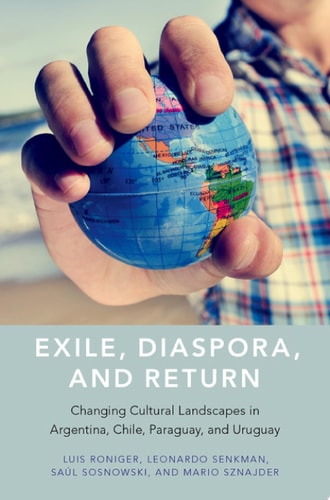
Exile, Diaspora, and Return
0
0
As an Amazon Associate and affiliate partner, Menrva Books earns from qualifying purchases. Learn more
Author Description
During The Late Twentieth And Early Twenty-first Centuries, Dictatorships In Latin America Hastened The Outward Movement Of Intellectuals, Academics, Artists, And Political And Social Activists To Other Countries. Following The Coups That Toppled Democratically Elected Governments Or Curtailed Parliamentary Oversight, The Incoming Military Or Civilian-military Administrations Assumed That, By Forcing Those Aligned With Opposition Movements Out Of The Country, They Would Assure Their Control Of Politics And Domestic Public Spheres. Yet, By Enlarging A Diaspora Of Co-nationals, The Authoritarian Rulers Merely Extrapolated Internal Dissent And Conflicts, Emboldening Opposition Forces Beyond Their National Borders. Displaced Individuals Soon Had A Presence In Many Host Countries, Gaining The Support Of Solidarity Circles And Advocacy Networks That Condemned Authoritarianism And Worked With Exiles And Internal Resistance Towards The Restoration Of Electoral Democracy. Exiles Soon Became Vehicles For Spreading Cultural Ideas From Abroad, Celebrating Cosmopolitanism Over Nationalism, And Emphasizing Human Rights And Democracy In Latin American Countries. Exile, Diaspora, And Return Explores How Argentina, Chile, Paraguay, And Uruguay Have Been Affected By Post-exilic Relocations, Transnational Migrant Displacements, And Diasporas. Specifically, This Book Provides The First Comprehensive Analysis Of Diasporic Experiences And The Impact Of Returnees On The Public Life, Culture, Institutions, And Development Of Post-authoritarian Politics In The Southern Cone Of The Americas. Bringing Together Sociopolitical, Cultural, And Policy Analysis With The Testimonies Of Dozens Of Intellectuals, Academics, Political Activists, And Policy Makers, The Authors Address The Impact Of Exile On People's Lives And On Their Fractured Experiences; The Debates And Prospects Of Return; The Challenges Of Dis-exile And Post-exilic Trends; And The Ways In Which Those Who Experienced Exile Impacted Development.
Menrva's Summary
THE THESIS
This book investigates the long-term sociopolitical and cultural impact of forced exile and subsequent return on the nations of the Southern Cone of Latin America. The authors, a team of established scholars in Latin American history and politics, utilize a combination of policy analysis, historical documentation, and personal testimonies to examine how the diaspora of intellectuals and activists during the late twentieth-century dictatorships shaped the post-authoritarian landscape of Argentina, Chile, Paraguay, and Uruguay.
THE SCOPE MAP
What You Will Find
- Analysis of transnational migrant networks and solidarity circles during military regimes.
- Examination of the cultural and institutional influence of returnees on post-authoritarian governance.
- Qualitative data derived from interviews and testimonies of academics, activists, and policy makers.
Scope Limits
- The analysis is geographically restricted to the Southern Cone of South America.
- The text focuses primarily on the experiences of intellectuals and political activists rather than the broader migrant population.
THE AUTHORITY PERSPECTIVE
Scholars recognize this work as a foundational text for understanding the transnational dimensions of Latin American political history. Readers frequently note the academic density of the prose and the depth of the primary source material provided by the authors.
Page Count:
288
Publication Date:
2017-01-01
Publisher:
Oxford University Press
ISBN-10:
0190693975
ISBN-13:
9780190693978
History
Sociology
Human rights
American Studies
Migration Studies
Community Tags
Similar Books




Reader Comments
Share Your Thoughts
No comments yet. Be the first to share your thoughts!