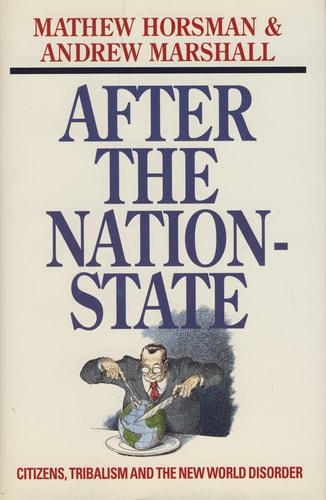
After the Nation-State: Citizens, Tribalism, and the New World Disorder
0
0
As an Amazon Associate and affiliate partner, Menrva Books earns from qualifying purchases. Learn more
Author Description
Traces the genesis of the nation-state, its rise as a form of organization and its expansion from Europe to the new nations of America, Asia and Africa. The authors argue that the nation-state has now reached a point of crisis as a form of political, economic and social organization with the result that the world is likely to experience a period of growing tensions and instability. No longer will states be able to operate outside the dictates of the global economy whilst a limited control will be retained over more local issues, in other areas authority will have to be forfeited. Consequently, impulses of nationalism and tribalism will find themselves in competition which is bound to affect the relationship of citizens to states, and hence the character of nationalism itself. Drawing on historical, economic and political analysis of the nation-state and its enemies, the authors argue that the time has come for a reappraisal of the nation-state's role. This book concludes that the 21st century will be about running capitalism and managing tribalism as the tension between the two will be the hallmark of international politics in the decades to come
Menrva's Summary
THE THESIS
This work investigates whether the nation-state has reached a terminal point of crisis as the primary unit of global political and economic organization. Mathew Horsman utilizes a synthesis of historical, economic, and political analysis to argue that the traditional state is losing its capacity to function autonomously. The author posits that the 21st century will be defined by the friction between globalized capitalism and resurgent tribalism, forcing a fundamental reappraisal of state authority.
THE SCOPE MAP
What You Will Find
- A historical survey of the genesis and global expansion of the nation-state model.
- Analysis of the diminishing sovereignty of states within the global economic framework.
- Examination of the competing forces of nationalism and tribalism in the modern era.
- Theoretical projections regarding the future relationship between citizens and political institutions.
THE AUTHORITY PERSPECTIVE
The text provides a dense, analytical framework for understanding the structural challenges facing modern governance in an era of rapid globalization. Its arguments regarding the erosion of state power and the rise of localized tribalism offer a sobering perspective on the trajectory of international politics.
Page Count:
298
Publication Date:
1994-01-01
Publisher:
HarperCollins
ISBN-10:
0002551454
ISBN-13:
9780002551458
Economics
History
Sociology
International Cooperation
Nationalism
International relations
National state
Globalization
Post-communism
Community Tags
Similar Books