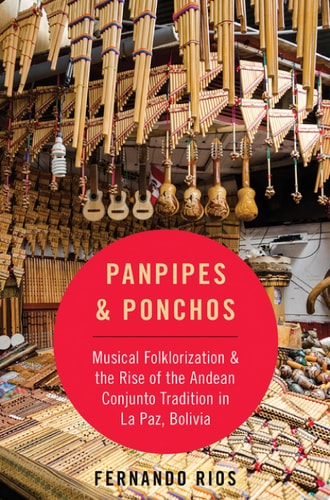
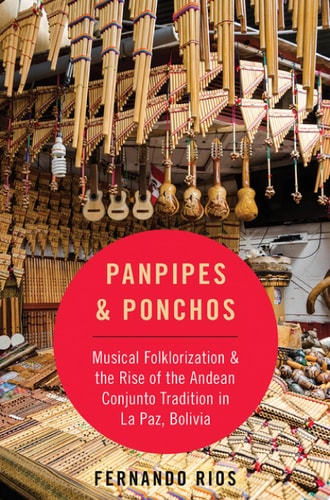
Panpipes & Ponchos: Musical Folklorization and the Rise of the Andean Conjunto Tradition in La Paz, Bolivia
0
0
As an Amazon Associate and affiliate partner, Menrva Books earns from qualifying purchases. Learn more
Author Description
Melodious panpipes and kena flutes. The shimmering strums of a charango. Poncho-clad musicians playing "El Cóndor Pasa" at subway stops or street corners while selling their recordings. These sounds and images no doubt come to mind for many "world music" fans when they recall their early encounters with Andean music groups. Ensembles of this type — known as "Andean conjuntos" or "pan-Andean bands" — have long formed part of the world music circuit in the Global North. In the major cities of Latin America, too, Andean conjuntos have been present in the local music scene for decades, not only in Peru, Bolivia, and Ecuador (i.e., in the Andean countries), but also in Argentina, Chile, Colombia, and Mexico. It is solely in Bolivia, however, that the Andean conjunto has represented the preeminent folkloric-popular music ensemble configuration for interpreting national musical genres from the late 1960s onward. Despite its frequent association with indigenous villages, the music of Andean conjuntos bears little resemblance to the indigenous musical expressions of the Southern Andes. Created by urban criollo and mestizo folkloric artists, the Andean conjunto tradition represents a form of mass-mediated folkloric music, one that is only loosely based on indigenous musical practices. Panpipes & Ponchos reveals that in the early-to-mid 20th century, a diverse range of musicians and ensembles, including estudiantinas, female vocal duos, bolero trios, art-classical composers, and mestizo panpipe groups, laid the groundwork for the Andean conjunto format to eventually take root in the Bolivian folklore scene amid the boom decade of the 1960s. Author Fernando Rios analyzes local musical trends in conjunction with government initiatives in nation-building and the ideologies of indigenismo and mestizaje. Beyond the local level, Rios also examines key developments in Bolivian national musical practices through their transnational links with trends in Peru, Argentina, Chile, Mexico,
Menrva's Summary
THE THESIS
This book investigates how the Andean conjunto ensemble emerged as the dominant form of folkloric-popular music in Bolivia, challenging the common perception that these groups represent authentic indigenous musical traditions. Fernando Rios, an ethnomusicologist, utilizes historical analysis and musicological research to demonstrate that the conjunto tradition is a mid-20th-century urban creation. He argues that this musical format was shaped by government-led nation-building projects, the ideologies of indigenismo and mestizaje, and a complex interplay of transnational musical trends across Latin America.
THE SCOPE MAP
What You Will Find
- Historical development of Bolivian musical ensembles from the early 20th century through the 1960s.
- Analysis of the influence of estudiantinas, bolero trios, and art-classical composers on the conjunto format.
- Examination of the intersection between state-sponsored cultural policy and musical performance.
Scope Limits
- The study does not focus on the authentic, rural indigenous musical practices of the Southern Andes, but rather on the urban, mass-mediated interpretation of those sounds.
THE AUTHORITY PERSPECTIVE
Scholars in the field of ethnomusicology recognize this work as a rigorous examination of the construction of national identity through music. Experts frequently highlight the author's ability to synthesize complex political ideologies with specific musical evolution, making it a significant contribution to the study of Latin American popular culture.
Page Count:
295
Publication Date:
2020-01-01
Publisher:
Oxford University Press
ISBN-10:
0190692308
ISBN-13:
9780190692308
Folk Music
American Studies
Traditional Folk
Latin
Musicology
Music History
Humanities
Bolivian History
Community Tags
Other Editions(2)
Similar Books










Reader Comments
Share Your Thoughts
No comments yet. Be the first to share your thoughts!