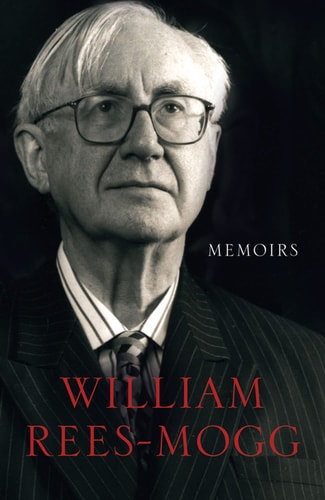
Memoirs
0
0
As an Amazon Associate and affiliate partner, Menrva Books earns from qualifying purchases. Learn more
Author Description
Former editor of The Times, the late William Rees-Mogg was a pivotal figure of post-war Britain. Here he recounts the remarkable story of his life.As editor of The Times (his glory years), journalist, commentator, Chairman of the Arts Council, and, later, Chairman of the Broadcasting Standards Council (when he was accused of censorship), the William Rees-Mogg spent his life at the centre of events in politics and journalism.Often controversial, his strong, fiercely defended opinions went to the heart of the problems of the day. From his famous defence of Mick Jagger on a charge of possessing cannabis, to his recent criticism of the morality behind the war in Kosovo and defence of monetarism, his writing demanded attention, to the point of becoming newsworthy in itself.He knew the people who shaped our time, from royalty to presidents, business magnates and religious leaders, and his unique insider perspective is here used to great effect, with perceptive, provocative recollections of people such as Rab Butler, Margaret Thatcher, Anthony Eden, Shirley Williams, Roy Jenkins, Roy Day, Rupert Murdoch and many more.From an early age his life was filled with incident – among the many anecdotes are the stories of the Bristol Blitz; his doomed attempts to enter politics; writing speeches for Anthony Eden during Suez; hiring burglars to uncover corruption in the Met; an eventful stay at Chequers with Harold Wilson; how Rupert Murdoch amused the Queen at lunch; and how Harold Macmillan impressed Ronald Reagan at dinner.His colourful and illuminating memoirs offer a wonderfully readable life of one of the great characters of the age.
Menrva's Summary
THE THESIS
This memoir investigates the life and career of William Rees-Mogg, a central figure in post-war British journalism and public life, to understand the intersection of media influence and political power. As a former editor of The Times and a prominent public intellectual, Rees-Mogg utilizes his personal archives and recollections to document his involvement in major historical events. He presents a framework of his professional evolution, from his early journalistic endeavors to his controversial roles in the Arts Council and the Broadcasting Standards Council, while reflecting on the shifting moral and political landscape of the twentieth century.
THE SCOPE MAP
What You Will Find
- Detailed accounts of the editorial operations at The Times during the mid-twentieth century.
- First-hand observations of key political figures including Margaret Thatcher, Anthony Eden, and Harold Wilson.
- Anecdotal evidence regarding the cultural and social shifts in Britain, including the Bristol Blitz and the evolution of the media landscape.
- Analysis of the author's controversial public stances on monetarism, censorship, and international conflicts.
THE AUTHORITY PERSPECTIVE
The text provides a dense, insider perspective on the British establishment, offering significant historical value for those interested in the mechanics of post-war media and politics. The narrative style is characterized by a reflective, authoritative tone that highlights the author's unique position at the center of national discourse.
Page Count:
352
Publication Date:
2011-07-07
Publisher:
HarperPress
ISBN-10:
0002571838
ISBN-13:
9780002571838
Politics
Biography
Memoir
History
Autobiography
Kindle eBooks
Europe
Human Anatomy
Journalists
Business
Journalism
Kindle Store
Mutation biology
Leaders & Notable People
Political
Great Britain
Memoirs
Categories
British History
Historical
Community Tags
Other Editions(3)

Similar Books

Reader Comments
Share Your Thoughts
No comments yet. Be the first to share your thoughts!