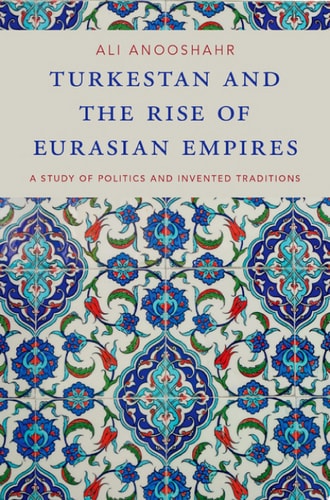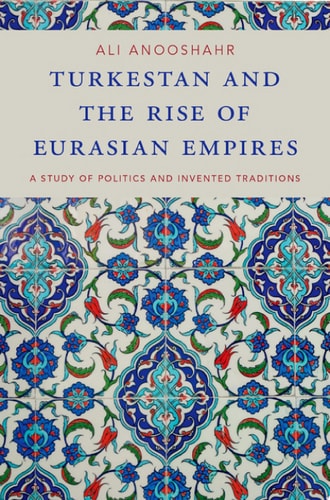
Turkestan and the Rise of Eurasian Empires
0
0
As an Amazon Associate and affiliate partner, Menrva Books earns from qualifying purchases. Learn more
Author Description
It Has Long Been Known That The Origins Of The Early Modern Dynasties Of The Ottomans, Safavids, Mughals, Mongols, And Shibanids In The Sixteenth Century Go Back To Turco-mongol Or Turcophone War Bands. However, Too Often Has This Connection Been Taken At Face Value, Usually Along The Lines Of Ethno-linguistic Continuity. Turkestan And The Rise Of Eurasian Empires Argues That The Connection Between A Mythologized Turkestani Or Turco-mongol Origin And These Dynasties Was Not Simply And Objectively Present As Fact. Rather, Much Creative Energy Was Unleashed By Courtiers And Leaders From Bosnia To Bihar (with Bukhara And Badakhshan Along The Way) In Order To Manipulate And Invent The Ancestry Of The Founders Of These Dynasties. Through Constructed Genealogies, Nascent Empires Founded On Disorganized Military And Political Events Were Reduced To Clear And Stable Categories. With Proper Family Trees In Place And Their Power Legitimized, Leaders Became Far Removed From Their True Identities As Bands Of Armed Men And Transformed Into Warrior Kings. This Created A Longstanding Pattern Of False Histories Created By The Intellectuals Of The Day. Essentially, One Can Even Say That Turco-mongol Progenitors Did Not Beget The Ottoman, Safavid, Mughal, Mongol, And Shibanid States. Quite The Contrary, One Can Instead Say That Historians Writing In These Empires Were The Ancestors Of The Turco-mongol Lineage Of Their Founders. Using One Or More Specimens Of Persian Historiography, In A Series Of Five Case Studies, Each Focusing On One Of These Early Polities, Ali Anooshahr Shows How Turkestan, Central Asia, Or Turco-mongol Functioned As Literary Tropes In The Political Discourse Of The Time.
Menrva's Summary
THE THESIS
This work investigates how early modern Eurasian dynasties utilized the construction of mythologized genealogies to legitimize their political authority. Ali Anooshahr, a scholar of Persian historiography, examines how court intellectuals across the Ottoman, Safavid, Mughal, Mongol, and Shibanid empires manipulated historical narratives to transform disparate military bands into established, legitimate dynasties. The author argues that the concept of a 'Turco-mongol' origin was not an objective historical fact, but rather a literary trope actively invented by historians to provide stability and prestige to new ruling houses.
THE SCOPE MAP
What You Will Find
- Analysis of five distinct case studies covering the Ottoman, Safavid, Mughal, Mongol, and Shibanid empires.
- Examination of Persian historiographical texts as primary tools for political discourse.
- A framework for understanding how ancestral myths function as instruments of statecraft.
Scope Limits
- The study does not provide a comprehensive military history of the mentioned dynasties.
- The analysis is restricted to the literary and intellectual construction of identity rather than archaeological or genetic evidence.
THE AUTHORITY PERSPECTIVE
Scholars in the field of Central Asian and Islamic history recognize this text as a significant contribution to the study of political legitimacy and historiography. Readers frequently note the academic density of the prose, which requires a foundational understanding of early modern Eurasian political structures.
Page Count:
256
Publication Date:
2018-01-01
Publisher:
Oxford University Press
ISBN-10:
0190693576
ISBN-13:
9780190693572
History
Asian History
Middle Eastern
Historiography
History - Modern
Community Tags
Similar Books