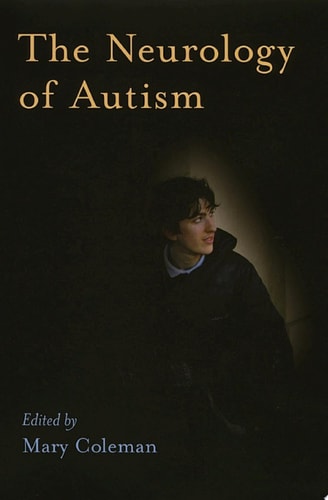
The Neurology of Autism
0
0
As an Amazon Associate and affiliate partner, Menrva Books earns from qualifying purchases. Learn more
Author Description
In Neurology of Autism, Mary Coleman, Catalina Betancur, G. Robert DeLong, Christopher Gillberg, Yoshiko Nomura, Lorenzo Pavone, Martin Ruggieri, and Michele Zappella use the tools of neurological analysis to address a number of the major questions that have arisen in the study of autism. The answers they present have important implications for the direction of future autism research, diagnosis, and treatment. What are the neurological signs and symptoms of autism? The latest information is presented here in an in-depth discussion of epilepsy, cranial circumference, changes in muscle tone, stereotypies, and mutism found in children with autism. In addition, a template is provided for practitioners to follow when conducting neurological examinations of a child with autism. What are the best options for the treatment of autism? The current medical, educational, and alternative therapies are thoroughly reviewed and evaluated. Is autism reversible? The question is explored for syndromic autism, where diseases may have a transient autistic phase, and reviewed in detail for nonsyndromic autism.Is autism primarily a single disease, as originally described by Leo Kanner? Research presented here suggests that autism is, instead, a syndrome involving many disease entities. Has the incidence of autism been increasing in recent years? A sophisticated, historical review of autisms prevalence rates suggests that it has never been rare. What is the relationship between autism and Asperger syndrome? The latest evidence presented here sheds light on the degree to which both syndromes share more than clinical characteristics; they also have some similar findings in imaging, neuropathological, and genetic studies. Which components of the brains neural networks need to be impaired to cause the appearance of autistic symptoms? Although there are many candidate regions, dysfunction of the cerebellum and its circuits is noted to be of great interest. Student and professional researchers,
Menrva's Summary
THE THESIS
This work investigates whether autism represents a single disease entity or a complex syndrome comprised of multiple distinct neurological conditions. Mary Coleman and a team of international experts utilize clinical neurological data, historical prevalence studies, and neuroimaging research to challenge traditional diagnostic frameworks. The authors argue that by identifying specific neurological markers and circuit dysfunctions, researchers can better categorize the spectrum and improve targeted treatment outcomes.
THE SCOPE MAP
What You Will Find
- Clinical analysis of neurological symptoms including epilepsy, cranial circumference, and muscle tone
- A standardized template for conducting neurological examinations in autistic children
- Comparative studies between autism and Asperger syndrome regarding imaging and genetics
- Historical review of autism prevalence rates and diagnostic criteria
Scope Limits
- Does not provide a comprehensive guide to non-medical behavioral therapies
- Focuses primarily on the neurological and biological underpinnings rather than social or psychological support systems
THE AUTHORITY PERSPECTIVE
Experts recognize this text as a significant contribution to the biological understanding of autism, particularly for its focus on the cerebellum and syndromic classifications. Readers frequently note the academic density of the prose, making it most suitable for clinicians, researchers, and advanced students in the medical field.
Page Count:
272
Publication Date:
2005-01-01
Publisher:
Oxford University Press
ISBN-10:
0190292903
ISBN-13:
9780190292904
Psychology
Science
Autism
Family & Consumer Sciences
Allied Health
Developmental Psychology
Neurology
Medical
Neuroscience
Community Tags
Other Editions(4)

Similar Books






Reader Comments
Share Your Thoughts
No comments yet. Be the first to share your thoughts!