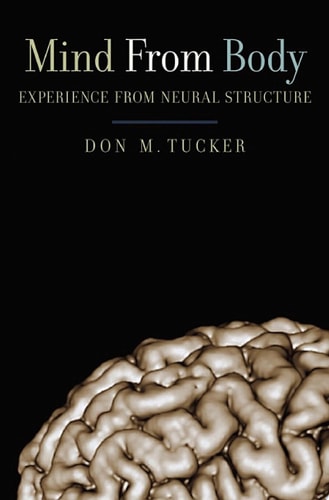
Mind from Body: Experience from Neural Structure
0
0
As an Amazon Associate and affiliate partner, Menrva Books earns from qualifying purchases. Learn more
Author Description
Although we no longer live in the relative simplicity of the Jurassic age, and even though we are not aware of them, primitive mammalian brain that developed in that era still live on inside our skulls and remain crucial to our daily functions. The challenges we face today in the information age--how to process the vastly greater, more varied and quickly changing inputs we receive--are very different from those that our ancestors faced during the Jurassic age. As we struggle to process overwhelming amounts of information, we may sometimes ask whether our brains can change to help us adapt. In fact, our brains have always changed gradually, so the questions we should ask are really how our brains will change, and whether we will be able to take full advantage of the changes, perhaps even enhance them, to help us keep up with the accelerating evolution of machines. To understand how our brains will change, we need to understand how they evolved in the first place, as well as how the interactions of the resulting brain structures, including the relics of primitive mammalian and even reptilian processes, influence how we think and act. In Mind from Body, Don Tucker, one of the most original thinkers about organic information processing, provides a fascinating analysis of how our brains have become what they are today and speculates intriguingly about what they could be tomorrow. He presents important research that explains how personal experience creates the emotional and motivational bases of each of our thoughts, even though we are usually not aware that it is happening. Tucker shows that in exploring how these bodily thought processes still determine how we react to the world and make decisions, we can become more rational in our actions, free ourselves from fruitless or even self-destructive patterns of behavior, become more efficient, and perhaps even wiser. By combining the most up-to-date scientific thought and hands-on experimental results, expressed clearly and
Menrva's Summary
THE THESIS
How do the evolutionary remnants of primitive brain structures continue to shape modern human cognition and decision-making in an information-dense environment? Don M. Tucker, a researcher in organic information processing, examines the intersection of evolutionary biology and contemporary neuroscience. He argues that the human brain remains tethered to ancestral structures that dictate emotional and motivational responses, often operating beneath the threshold of conscious awareness. By mapping these biological legacies, the author provides a framework for understanding how personal experience integrates with neural architecture to influence behavior.
THE SCOPE MAP
What You Will Find
- Analysis of reptilian and primitive mammalian brain structures within the human cranium.
- Examination of how bodily processes influence rational thought and decision-making.
- Synthesis of current neuroscientific research regarding neural plasticity and adaptation.
- Strategies for identifying and mitigating self-destructive behavioral patterns rooted in ancestral neural pathways.
Scope Limits
- The text does not provide a comprehensive clinical manual for treating specific neurological disorders.
- It does not offer a detailed technical roadmap for future machine-brain interface technologies.
THE AUTHORITY PERSPECTIVE
Experts recognize this work as a bridge between evolutionary biology and practical cognitive psychology. Readers frequently note the accessible synthesis of complex neural data, though some suggest the speculative conclusions regarding future brain evolution require further empirical validation.
Page Count:
343
Publication Date:
2007-01-01
Publisher:
Oxford University Press
ISBN-10:
0190295562
ISBN-13:
9780190295561
Psychology
Allied Health
Medical
Evolutionary Biology
Human behavior
Neuroscience
Community Tags
Other Editions(2)
Similar Books







Reader Comments
Share Your Thoughts
No comments yet. Be the first to share your thoughts!