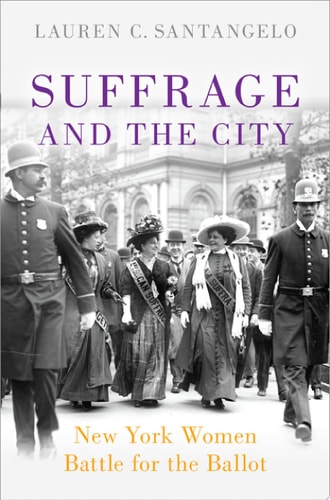
Suffrage and the City
0
0
As an Amazon Associate and affiliate partner, Menrva Books earns from qualifying purchases. Learn more
Author Description
In 1917, Women Won The Vote In New York State. Suffrage And The City Explores How Activists In New York City Were Instrumental In Achieving This Milestone. Santangelo Uncovers The Ways In Which The Demand For Women's Rights Intersected With The History, Politics, And Culture Of New York City In The Gilded Age And Progressive Era. The Fight For The Vote In The Nation's Largest Metropolis Demanded That Suffragists Both Mobilize And Contest Urban Etiquette, As They Worked To Gain Visibility And Underscore Their Cause's Respectability. From The Polo Grounds To The Lower East Side, Organizers Championed Political Equality To Anyone Who Would Listen In The Early Twentieth Century. Their Fifth Avenue Parades Showcased The Various Manhattan Subcultures, Including Industrial Laborers, Teachers, Nurses, And Even Socialites, That They Transformed Into A Broad Coalition By The 1910s. Films And Newspapers Broadcasted Their Tactics To Rest Of The Country, Just As The National Suffrage Organization Decided To Draw On Gotham's Resources By Moving Its Own Headquarters To Midtown And Thereby Turning Manhattan Into The Movement's Capital. The City's Mores, Rhythms, And Physical Layout Helped To Shape What Was Possible For Organizers Campaigning Within It. At The Same Time, Suffragists Helped To Redefine The Urban Experience For White, Middle-class Women. Combining Urban Studies, Geography, And Gender And Political History, Suffrage And The City Demonstrates That The Big Apple Was More Than Just A Stage For Suffrage Action; It Was Part Of The Drama. As Much As Enfranchisement Was A Political Victory In New York State, It Was Also A Uniquely Urban And Cultural One.
Menrva's Summary
THE THESIS
This work investigates how the unique urban environment of New York City functioned as both a catalyst and a structural influence in the success of the women's suffrage movement in New York State. Lauren C. Santangelo, a scholar of American history and urban studies, utilizes archival research and historical analysis to argue that the city's specific geography, social mores, and political culture were essential to the movement's evolution. By examining the intersection of gender politics and urban development, the book demonstrates that the fight for the vote was inextricably linked to the physical and social landscape of early twentieth-century Manhattan.
THE SCOPE MAP
What You Will Find
- Analysis of the Gilded Age and Progressive Era political landscape in New York City.
- Examination of how urban geography and public spaces like Fifth Avenue and the Lower East Side influenced protest tactics.
- Documentation of the diverse coalition of women, including laborers, teachers, and socialites, involved in the movement.
Scope Limits
- The study focuses primarily on the urban experience within New York City rather than a comprehensive national history of the suffrage movement.
- The analysis centers on the specific cultural and political dynamics of the 1910s, with less emphasis on the post-enfranchisement era.
THE AUTHORITY PERSPECTIVE
Historians and urban studies scholars recognize this text for its interdisciplinary approach to political history. Readers frequently note the clarity with which the author connects the physical layout of Manhattan to the strategic development of the suffrage movement.
Page Count:
224
Publication Date:
2019-01-01
Publisher:
Oxford University Press
ISBN-10:
019085037X
ISBN-13:
9780190850371
History
Urban Studies
Social History
American History
Womens Studies
Political History
Community Tags
Similar Books