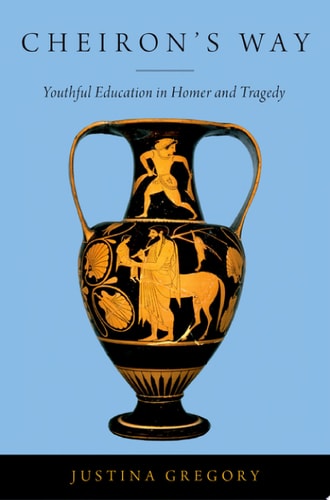
Cheiron's Way
0
0
As an Amazon Associate and affiliate partner, Menrva Books earns from qualifying purchases. Learn more
Author Description
This Book Studies The Social And Ethical Formation Of Youthful Figures In Homer, Sophocles, And Euripides. Every Fictional Character Comes With A Past Attached, A Presumed Personal History That Is Both Implicit And Explicit; For The Youthful Heroes And Heroines Of Epic And Tragedy, Early Education Figures Significantly In That Past. Cheiron's Way Takes As Its Point Of Departure The Words Of Homer's Phoenix To Achilles, Who Claims, I Made You The Man You Are As He Pleads With His Former Pupil To Let Go Of His Anger. The Book Begins By Exploring Topics Relevant To Heroic And Tragic Education: Age Classes, Rites Of Passage, Verbal Modes Of Instruction, Social Conditioning, Mentoring, Peer Role Models, And The Controversial Balance Between Nature And Nurture. It Introduces The First Teacher In The Greek Tradition, Cheiron The Centaur, Who Founded A School For Young Heroes In His Thessalian Cave And Instructed Achilles, Jason, And Others With Mixed Success. Next It Turns To The Iliadic Achilles, Who Achieves Maturity By Way Of Successive Crises-a Crisis Of Disillusionment With The Assumptions That Shaped His Heroic Education, Followed By A Crisis Of Empathy For His Adversary-and Who Becomes An Influential Prototype For Tragedy. Examination Of The Odyssey Suggests That While Odysseus Received A Normative Heroic Upbringing And Nausicaa Internalizes Social Expectations For Young Women, Telemachus Is More Of An Outlier. In Tragic Representations Of Education Sophocles' Ajax And Neoptolemus Replicate The Achillean Pattern Only Partially And Unsuccessfully, As Does Euripides' Hippolytus; Only Achilles And Iphigenia In Euripides' Iphigenia In Aulis Achieve An Emotional Maturity Commensurate With The Iliadic Achilles'. Yet All These Texts Confirm, As Elegantly Argued In This Book, The Perennial Lure, Despite Uncertain Results, Of The Educational Enterprise For Communities, Students, And Teachers.
Menrva's Summary
THE THESIS
This book investigates the social and ethical formation of youthful figures within the works of Homer, Sophocles, and Euripides. Justina Gregory, a scholar of classical literature, utilizes a framework of educational theory to analyze how epic and tragic heroes are shaped by their upbringing. She argues that the process of education—encompassing mentorship, social conditioning, and rites of passage—is a central, albeit often fraught, preoccupation in the Greek literary tradition.
THE SCOPE MAP
What You Will Find
- Analysis of educational themes including age classes, rites of passage, and verbal instruction.
- Examination of the mentor-pupil dynamic, specifically focusing on Cheiron the Centaur.
- Comparative study of characters such as Achilles, Odysseus, Telemachus, Ajax, and Iphigenia.
Scope Limits
- The analysis is strictly confined to the texts of Homer, Sophocles, and Euripides.
- The book does not provide a comprehensive history of actual ancient Greek pedagogical institutions.
THE AUTHORITY PERSPECTIVE
Scholars and classicists frequently cite this work as a nuanced exploration of the intersection between character development and social expectation in ancient texts. Experts highlight the author's ability to synthesize complex literary patterns into a coherent argument regarding the nature of heroic education.
Page Count:
284
Publication Date:
2018-01-01
Publisher:
Oxford University Press
ISBN-10:
0190857897
ISBN-13:
9780190857899
Philosophy
History
Education - History
Literary Criticism
Community Tags
Similar Books