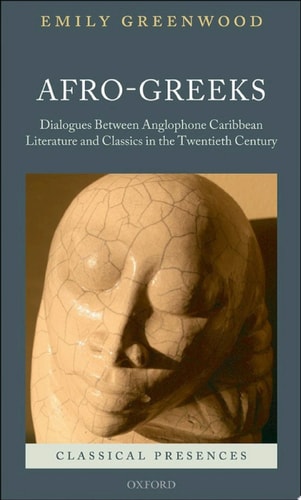
Afro-Greeks: Dialogues between Anglophone Caribbean Literature and Classics in the Twentieth Century
0
0
As an Amazon Associate and affiliate partner, Menrva Books earns from qualifying purchases. Learn more
Author Description
Afro-Greeks examines the reception of Classics in the English-speaking Caribbean, from about 1920 to the beginning of the 21st century. Emily Greenwood focuses on the ways in which Greco-Roman antiquity has been put to creative use in Anglophone Caribbean literature, and relates this regional classical tradition to the educational context, specifically the way in which Classics was taught in the colonial school curriculum. Discussions of Caribbean literature tend to assume an antagonistic relationship between Classics, which is treated as a legacy of empire, and Caribbean literature. While acknowledging the importance of this imperial context, Greenwood argues that Caribbean appropriations of Classics played an important role in formulating original, anti-colonial and anti-imperial criticism in Anglophone Caribbean fiction. Afro-Greeks reveals how, in the twentieth century, two generations of Caribbean writers, including Kamau Brathwaite, Austin Clarke, John Figueroa, C. L. R. James, V. S. Naipaul, Derek Walcott and Eric Williams, created a distinctive, regional counter-tradition of reading Greco-Roman Classics.
Menrva's Summary
THE THESIS
How did Anglophone Caribbean writers utilize Greco-Roman antiquity to construct a distinct, anti-colonial literary tradition during the twentieth century? Emily Greenwood, a scholar of classical reception, investigates the intersection of colonial educational curricula and the creative appropriation of classical texts. By analyzing the works of prominent Caribbean intellectuals and authors, she argues that the engagement with Classics was not merely a passive inheritance of empire, but a deliberate, critical tool used to articulate regional identity and resistance against imperial hegemony.
THE SCOPE MAP
What You Will Find
- Analysis of the colonial school curriculum and its role in disseminating classical education.
- Examination of literary works by authors including Kamau Brathwaite, Derek Walcott, and C. L. R. James.
- A framework for understanding the development of a regional counter-tradition of classical reading.
Scope Limits
- The study focuses primarily on the Anglophone Caribbean and does not provide an exhaustive survey of Francophone or Hispanophone Caribbean classical reception.
- The analysis is restricted to the period between 1920 and the early 21st century.
THE AUTHORITY PERSPECTIVE
Scholars in the field of classical reception recognize this work as a significant contribution to understanding how postcolonial writers negotiate the legacy of the ancient world. Readers frequently note the academic density of the prose and the depth of the author's engagement with both literary theory and historical context.
Page Count:
313
Publication Date:
2010-01-01
Publisher:
OUP Oxford
ISBN-10:
0191610313
ISBN-13:
9780191610318
English & College Success
Postcolonial
Education - History
Criticism history
Caribbean Studies
English
Literary Criticism