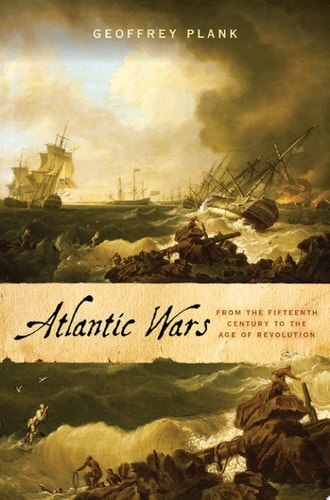
Atlantic Wars
0
0
As an Amazon Associate and affiliate partner, Menrva Books earns from qualifying purchases. Learn more
Author Description
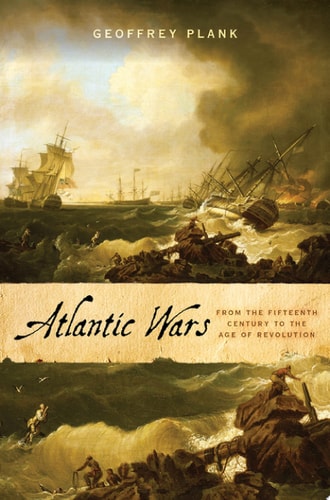
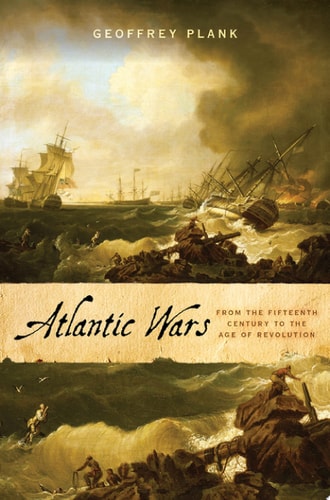
In a sweeping account, Atlantic Wars explores how warfare shaped the experiences of the peoples living in the watershed of the Atlantic Ocean between the late Middle Ages and the Age of Revolution. At the beginning of that period, combat within Europe secured for the early colonial powers the resources and political stability they needed to venture across the sea. By the early nineteenth century, descendants of the Europeans had achieved military supremacy on land but revolutionaries had challenged the norms of Atlantic warfare.Nearly everywhere they went, imperial soldiers, missionaries, colonial settlers, and traveling merchants sought local allies, and consequently they often incorporated themselves into African and indigenous North and South American diplomatic, military, and commercial networks. The newcomers and the peoples they encountered struggled to understand each other, find common interests, and exploit the opportunities that arose with the expansion of transatlantic commerce. Conflicts arose as a consequence of ongoing cultural misunderstandings and differing conceptions of justice and the appropriate use of force. In many theaters of combat profits could be made by exploiting political instability. Indigenous and colonial communities felt vulnerable in these circumstances, and many believed that they had to engage in aggressive military action--or, at a minimum, issue dramatic threats--in order to survive. Examining the contours of European dominance, this work emphasizes its contingent nature and geographical limitations, the persistence of conflict and its inescapable impact on non-combatants' lives.Addressing warfare at sea, warfare on land, and transatlantic warfare, Atlantic Wars covers the Atlantic world from the Vikings in the north, through the North American coastline and Caribbean, to South America and Africa. By incorporating the British, French, Spanish, Dutch, Portuguese, Africans, and indigenous Americans into one synthetic work, Geoffrey Plank provides a comprehensive view of the era.
Menrva's Summary
THE THESIS
This work investigates how warfare served as a primary catalyst for shaping the social, political, and economic landscapes of the Atlantic world from the late Middle Ages through the Age of Revolution. Geoffrey Plank, a historian specializing in colonial and Atlantic history, synthesizes a vast array of imperial and indigenous records to argue that European dominance was not an inevitable outcome but a contingent, geographically limited process. He posits that military conflict was driven by cultural misunderstandings, the pursuit of commercial interests, and the desperate survival strategies of both colonial and indigenous populations.
THE SCOPE MAP
What You Will Find
- Analysis of military engagements across Europe, Africa, and the Americas.
- Examination of the intersection between transatlantic commerce and military expansion.
- Comparative study of British, French, Spanish, Dutch, and Portuguese imperial strategies.
- Discussion of the role of indigenous and African diplomatic and military networks.
Scope Limits
- The text focuses primarily on the Atlantic watershed and does not provide a comprehensive global history of warfare.
- The analysis concludes at the early nineteenth century and does not extend into modern industrial warfare.
THE AUTHORITY PERSPECTIVE
Historians recognize this work as a significant synthesis that successfully integrates diverse regional histories into a cohesive Atlantic framework. Readers frequently note the academic density of the prose and the author's ability to balance broad geopolitical trends with the specific experiences of non-combatants.
Page Count:
344
Publication Date:
2020-06-19
Publisher:
Oxford University Press
ISBN-10:
0190860456
ISBN-13:
9780190860455
History
History - Modern
Atlantic World
Military History
Colonialism
Community Tags
Similar Books