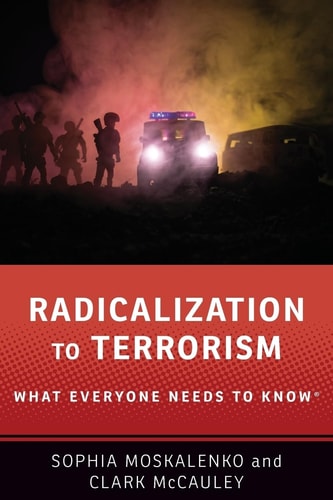
Radicalization to Terrorism: What Everyone Needs to Know
0
0
As an Amazon Associate and affiliate partner, Menrva Books earns from qualifying purchases. Learn more
Author Description
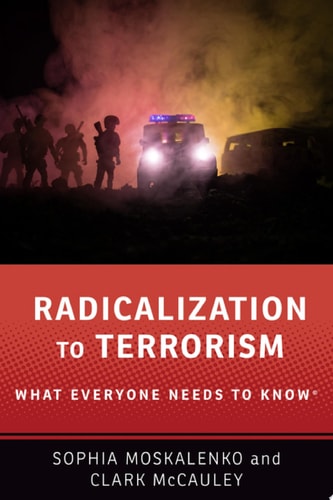
Terrorism and radicalization came to the forefront of news and politics in the US after the unforgettable attacks of September 11th, 2001. When George W. Bush famously asked "Why do they hate us?," the President echoed the confusion, anger and fear felt by millions of Americans, while also creating a politicized discourse that has come to characterize and obscure discussions of both phenomena in the media.Since then the American public has lived through a number of domestic attacks and threats, and watched international terrorist attacks from afar on television sets and computer screens. The anxiety and misinformation surrounding terrorism and radicalization are perhaps best detected in questions that have continued to recur in the last decade: "Are terrorists crazy?"; "Is there a profile of individuals likely to become terrorists?"; "Is it possible to prevent radicalization to terrorism?" Fortunately, in the two decades since 9/11, a significant body of research has emerged that can help provide definitive answers.As experts in the psychology of radicalization, Sophia Moskalenko and Clark McCauley propose twelve mechanisms that can move individuals, groups, and mass publics from political indifference to sympathy and support for terrorist violence. Radicalization to Terrorism: What Everyone Needs to Know synthesizes original and existing research to answer the questions raised after each new attack, including those committed by radicalized Americans. It offers a rigorously informed overview of the insight that will enable readers to see beyond the relentless news cycle to understand where terrorism comes from and how best to respond to it.
Menrva's Summary
THE THESIS
This book investigates the psychological and social mechanisms that drive individuals and groups toward radicalization and support for terrorist violence. Authors Clark R. McCauley and Sophia Moskalenko, both established experts in the psychology of political violence, synthesize two decades of empirical research to move beyond politicized discourse. They present a structured framework identifying twelve distinct mechanisms that transition populations from political indifference to active support for extremist acts.
THE SCOPE MAP
What You Will Find
- A twelve-mechanism framework explaining the progression of radicalization.
- Analysis of both individual and group-level radicalization processes.
- Examination of domestic and international terrorist threats post-9/11.
- Evidence-based responses to common public misconceptions regarding terrorist profiles.
Scope Limits
- The text focuses primarily on psychological and social drivers rather than specific geopolitical policy prescriptions.
- It does not provide an exhaustive historical account of every global terrorist organization.
THE AUTHORITY PERSPECTIVE
Experts in the field of security studies and political psychology recognize this work as a foundational synthesis of current radicalization research. Readers frequently note the clarity of the prose, which successfully translates complex academic findings into an accessible format for a general audience.
Page Count:
288
Publication Date:
2020-06-01
Publisher:
Oxford University Press
ISBN-10:
0190862580
ISBN-13:
9780190862589
Non-Fiction
Psychology
Sociology
Radicalism