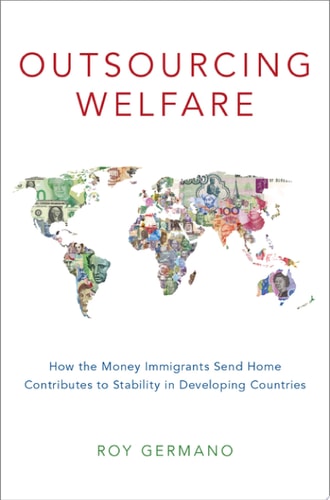
Outsourcing Welfare
0
0
As an Amazon Associate and affiliate partner, Menrva Books earns from qualifying purchases. Learn more
Author Description
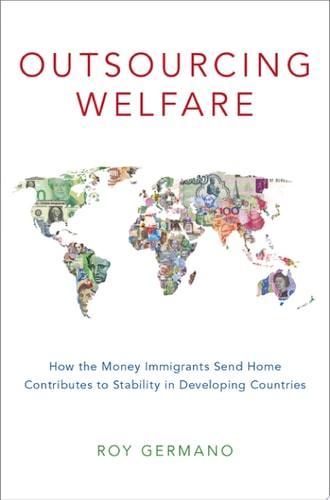
Rising Food Prices, Climate Change, And The Ravages Of Global Capitalism Have Made The Poor Increasingly Vulnerable To Economic Crises. At The Same Time, The Governments Of Many Developing Countries Have Adopted Austerity Measures That Leave Their Citizens Without A Safety Net In Times Of Need. This Combination Poses A Potent Threat To Social And Political Stability Throughout The Developing World. How Do The Poor Cope With Economic Crises When Their Governments Fail To Guarantee Social Welfare? How Do Societies Keep From Fracturing Under The Weight Of Economic Grievances And Civil Unrest? Outsourcing Welfare Argues That The Answers To These Questions Lie With Remittances, The Hundreds Of Billions Of Dollars That International Migrants Send To Their Home Countries. Remittances Are A Leading Source Of Income In Dozens Of Developing Economies And A Critical Lifeline That Millions Of Families Use To Pay For Food, Healthcare, Clothing, And Other Basics. In The Absence Of Adequate Government Social Protections, Remittances Insulate Poor Families From The Full Pain Of Economic Crises, And In Doing So, Reduce The Severity Of Grievances That Fuel Populist Anger, Civil Unrest, And Political Instability. Through Stories From His Fieldwork In Mexico And Central America And Analyses Of Data From Africa, Latin America, The Caribbean, And The Middle East, Roy Germano Shows How Remittances Buffer Economic Shocks, Contribute To Economic Optimism, And Dampen The Threat Of Popular Discontent During Economic Crises. Germano Argues That Remittances Perform A Social, Economic, And Political Function That Is Strikingly Similar To Social Spending, And That Counting On People To Migrate And Send Money Home Has Become A De Facto Social Welfare Policy In Many Developing Countries.
Menrva's Summary
THE THESIS
This book investigates how international remittances function as a de facto social welfare policy in developing nations where government-provided safety nets are absent or insufficient. Roy Germano, a political scientist specializing in the developing world, utilizes a combination of qualitative fieldwork and quantitative cross-national data to support his argument. He posits that remittances act as a critical buffer against economic shocks, thereby mitigating the political instability and civil unrest that typically arise from systemic poverty and austerity measures.
THE SCOPE MAP
What You Will Find
- Analysis of the correlation between remittance inflows and political stability in developing economies.
- Comparative study of social welfare functions performed by private migrant capital versus state-led social spending.
- Qualitative insights derived from extensive fieldwork conducted in Mexico and Central America.
- Quantitative data analysis covering regions in Africa, Latin America, the Caribbean, and the Middle East.
Scope Limits
- The text does not provide a comprehensive policy manual for government implementation of formal social welfare programs.
- The analysis does not focus on the long-term macroeconomic consequences of dependency on remittance-based economies.
THE AUTHORITY PERSPECTIVE
Experts in development economics and political science recognize this work as a significant contribution to understanding the intersection of migration and domestic political stability. Readers frequently note the clarity of the author's argument regarding the privatization of social safety nets in the global south.
Page Count:
224
Publication Date:
2018-01-01
Publisher:
Oxford University Press
ISBN-10:
0190862858
ISBN-13:
9780190862855
Economics
Migration Studies
Sociology
Public Policy
Community Tags
Similar Books