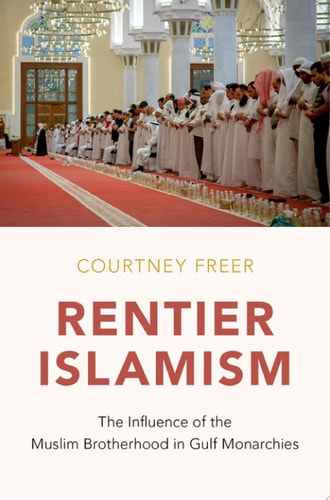
Rentier Islamism
0
0
As an Amazon Associate and affiliate partner, Menrva Books earns from qualifying purchases. Learn more
Author Description
While Scholars Have Long Looked At The Role Of Political Islam In The Middle East, It Has Been Assumed That Domestic Politics In The Wealthy Monarchical States Of The Arabian Gulf, So-called Rentier States Where Taxes Are Very Low And Oil Wealth Subsidizes The Needs Of Citizens, Are Largely Unaffected By Such Movements. However, The Long Accepted Rentier Theory Has Been Shortsighted In Overlooking The Socio-political Role Played By Muslim Brotherhood Affiliates In The Super-rentiers Of Kuwait, Qatar, And The United Arab Emirates. While Rentier State Theory Assumes That Citizens Of Such States Will Form Opposition Blocs Only When Their Stake In Rent Income Is Threatened, This Book Demonstrates That Ideology, Rather Than Rent, Have Motivated The Formation Of Independent Islamist Movements In The Wealthiest States Of The Region. In The Monarchical Systems Of Qatar And The Uae, Islamist Groups Do Not Have The Opportunity To Compete For Power And Therefore Cannot Use The Ballot Box To Gain Popularity Or Influence Political Life, As They Do Elsewhere In The Middle East. But, As This Book Points Out, The Division Between The Social And Political Sectors Is Often Blurred In The Socially Conservative States Of The Gulf, As Political Actors Operate Through Channels That Are Not Institutionalized. Simply Because Politics Is Underinstitutionalized In Such States Does Not Mean That It Is Underdeveloped; The Informal Realm Holds Considerable Political Capital. As Such, The Book Argues That Brotherhood Movements Have Managed To Use The Links Between The Social (i.e. Informal Personal Networks) And Political (i.e. Government Institutions) To Gain Influence In Policymaking In Such States.using Contemporary History And Original Empirical Research, Courtney Freer Updates Traditional Rentier State Theory And Argues That Political Islam Serves As A Prominent Voice And Tool To Promote More Strictly Political, And Often Populist Or Reformist, Views Supported By Many Gulf Citizens.
Menrva's Summary
THE THESIS
This book investigates how Islamist movements operate within the wealthy, monarchical rentier states of the Arabian Gulf, challenging the traditional assumption that oil wealth renders these states immune to political Islam. Courtney Freer, a scholar specializing in the politics of the Gulf, utilizes original empirical research and contemporary history to argue that ideology, rather than economic rent, drives the formation of independent Islamist groups. She posits that these movements exert influence by navigating the blurred lines between informal social networks and formal government institutions.
THE SCOPE MAP
What You Will Find
- Analysis of Muslim Brotherhood affiliates in Kuwait, Qatar, and the United Arab Emirates.
- A revised framework for Rentier State Theory that accounts for ideological motivation.
- Examination of informal political channels in underinstitutionalized systems.
Scope Limits
- The analysis focuses primarily on the specific monarchies of the Gulf and does not provide a comprehensive survey of all Middle Eastern political movements.
THE AUTHORITY PERSPECTIVE
Experts recognize this work as a significant update to traditional political science theories regarding the Gulf region. Readers frequently note the academic rigor and the clarity with which the author bridges the gap between social networks and formal policy influence.
Page Count:
288
Publication Date:
2018-01-01
Publisher:
Oxford University Press
ISBN-10:
0190862009
ISBN-13:
9780190862008
Middle Eastern
Islamism
International relations
Community Tags
Similar Books