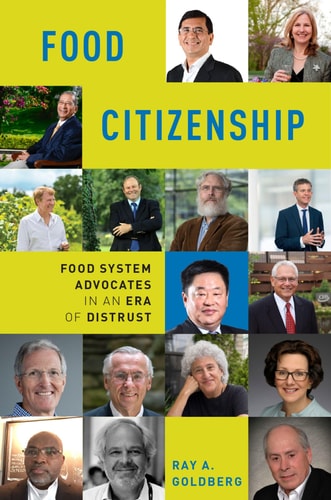
Food Citizenship: Food System Advocates in an Era of Distrust
0
0
As an Amazon Associate and affiliate partner, Menrva Books earns from qualifying purchases. Learn more
Author Description
The global food system is the largest segment of the world's economy. As agribusiness-studies pioneer Ray Goldberg suggests, it is also the largest health system on the planet. And it is changing fast. Its size and importance to human, environmental, and economic health means that no system is viewed with as much suspicion by so many people around the globe.Changing societal expectations and scientific and medical advances have made the drivers of the food system--the world's food citizens--realize they must take more responsibility for society's nutritional needs, economic development, and the health of the environment. Goldberg argues that the traditionally commodity-oriented, bargaining relationship between segments of the food system has become win-win, collaborative, and characterized by public and private partnerships. Those who are responding to society's needs are succeeding; those who are not are losing out.The food system's greatest growth area is the developing world, where millions of small-scale producers, workers, and impoverished consumers need help to become part of the commercial food system.In this book, Ray Goldberg interviews the change makers of today's food system: leaders and constructive critics in government, private industry, nonprofits, and academia who provide a panoramic and in-depth look at a revolution in progress.
Menrva's Summary
THE THESIS
How can the global food system evolve to meet the dual demands of economic viability and public trust in an era of increasing skepticism? Ray A. Goldberg, a pioneer in agribusiness studies, examines the transition of the food industry from a commodity-focused model to one centered on collaborative, public-private partnerships. By analyzing the intersection of health, environment, and economic development, Goldberg argues that the future success of food systems depends on the ability of stakeholders to act as responsible 'food citizens' who prioritize societal needs.
THE SCOPE MAP
What You Will Find
- Analysis of the shift from adversarial bargaining to collaborative partnerships in agribusiness.
- Interviews with leaders across government, private industry, nonprofits, and academia.
- Examination of the role of small-scale producers in the developing world within the commercial food system.
Scope Limits
- The text focuses primarily on systemic and economic structures rather than specific agricultural techniques or localized farming practices.
THE AUTHORITY PERSPECTIVE
Experts recognize this work as a significant contribution to agribusiness literature, particularly for its focus on the human and social dimensions of global food supply chains. Readers frequently note that the interview-based format provides a practical, real-world perspective on complex economic shifts.
Page Count:
344
Publication Date:
2018-07-05
Publisher:
Oxford University Press
ISBN-10:
0190871814
ISBN-13:
9780190871819
Business
Non-Fiction
Economics
Public Policy
Private Sector
Sustainability
Agriculture
Food Adulteration And Inspection
Food Industry
Food supply
Food Policy
Community Tags
Similar Books