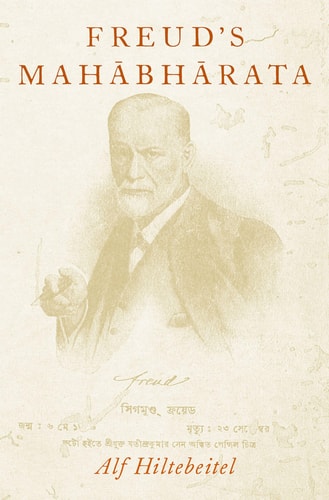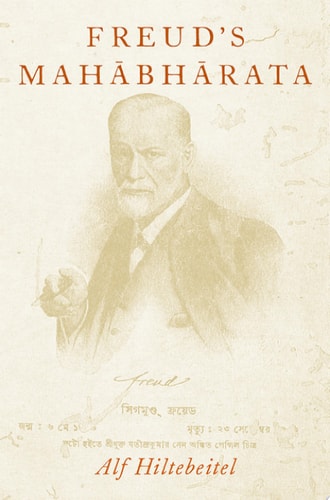
Freud's Mahabharata
0
0
As an Amazon Associate and affiliate partner, Menrva Books earns from qualifying purchases. Learn more
Author Description
This Book Presents Several New Ways That Freud's Work Enlivens Interpretation Of The Whole Mahabharata And Its Vernacular Retellings. It Takes Freud's 'the 'uncanny'' As An Entrée. Drawing On Work Of The French Psychoanalyst André Green, It Shows How The Epic's Main Story From Beginning To End Follows The 'depressive Posture' Of The 'dead Mother Complex.' And It Pursues Freud's Point In Moses And Monotheism That Religious Traditions Should Be Studied From What Has Shaped Their Past Unconsciously, Including Repressed Trauma That Affects Historical Memory. It Builds On This Premise To Offer A New Theory Of The Mahabharata That Focuses On Its Central Background Myth, Called 'the Unburdening Of The Earth'-- Introduction: Freud's The 'uncanny' And The Mahābhārata -- A Short Introduction To Freud's Mahābhārata Through The Pāṇḍavas' Mother Kunti -- Two-times-three Dead Mother Texts: Dead Mothers And Nascent Goddesses -- Uncanny Domesticities: Nascent Goddesses In The Mahābhārata -- Kālī And Arāvan̲-kūttāṇṭavar: Rethinking Bose's Oedipus Mother -- Moses And Monotheism And The Mahābhārata: Trauma, Loss Of Memory, And The Return Of The Repressed. Alf Hiltebeitel. Includes Bibliographical References And Index.
Menrva's Summary
THE THESIS
This book investigates how Freudian psychoanalytic theory, particularly the concepts of the 'uncanny' and the 'dead mother complex,' provides a framework for interpreting the Mahabharata and its various vernacular retellings. Alf Hiltebeitel, a scholar of Indian epics, utilizes the work of Andre Green and Freud's theories on trauma and historical memory to re-examine the epic's central myth of the 'unburdening of the earth.' By applying these psychological lenses, the author argues that the text reflects repressed traumas and unconscious historical shaping that define the religious tradition.
THE SCOPE MAP
What You Will Find
- Application of Freud's 'the uncanny' to epic narrative structures
- Analysis of the 'dead mother complex' within the Pandavas' lineage
- Examination of the 'unburdening of the earth' as a foundational background myth
- Comparative study of Moses and Monotheism in relation to Indian epic trauma
Scope Limits
- The analysis is restricted to the specific psychoanalytic frameworks of Freud and Green
- The text does not provide a comprehensive historical overview of the Mahabharata outside of its psychological interpretation
THE AUTHORITY PERSPECTIVE
Scholars in the field of South Asian studies recognize this work as a specialized, interdisciplinary contribution that bridges Western psychoanalytic theory with classical Indian literature. Readers frequently note the academic density of the prose and the author's rigorous application of complex psychological concepts to ancient textual traditions.
Page Count:
288
Publication Date:
2018-01-01
Publisher:
Oxford University Press,
ISBN-10:
0190878347
ISBN-13:
9780190878344
Epic Poetry
Mythology
Literary Criticism
Psychoanalysis
Hindu Studies
Community Tags
Other Editions(3)
Similar Books