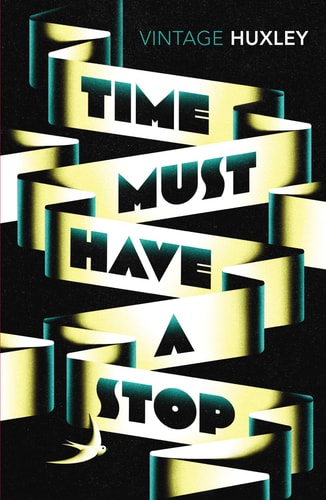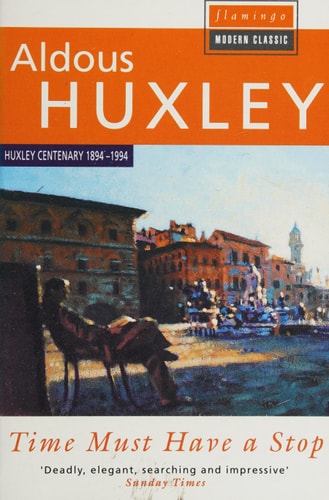
Time Must Have a Stop
0
0
As an Amazon Associate and affiliate partner, Menrva Books earns from qualifying purchases. Learn more
Author Description
Sebastian Barnack, a handsome English schoolboy, goes to Italy for the summer, and there his real education begins. His teachers are two quite different men: Bruno Rontini, the saintly bookseller, who teaches him about things spiritual; and Uncle Eustace, who introduces him to life's profane pleasures. The novel that Aldous Huxley himself thought was his most successful at "fusing idea with story," "Time Must Have a Stop" is part of Huxley's lifelong attempt to explore the dilemmas of twentieth-century man and to create characters who, though ill-equipped to solve the dilemmas, all go stumbling on in their painfully serious comedies (in this novel we have the dead atheist who returns in a seance to reveal what he has learned after death but is stuck with a second-rate medium who garbles his messages). "Time Must Have a Stop" is one of Huxley's finest achievements.
Menrva's Summary
THE PULSE
Sebastian Barnack, a young man spending a summer in Italy, finds his moral development pulled between the opposing influences of a saintly bookseller and a hedonistic uncle. As Sebastian navigates the complexities of adulthood, he encounters a world defined by the tension between spiritual aspiration and profane indulgence. The narrative follows his internal and external conflicts, utilizing a blend of sharp social satire and metaphysical inquiry to examine the human condition. Huxley employs a third-person perspective to observe the characters as they grapple with their own limitations and the absurdity of their circumstances.
INSIDE THE PAGES
- Exploration of the dichotomy between asceticism and hedonism
- Satirical portrayal of the British upper-middle class
- Incorporation of metaphysical and spiritual themes
- Use of a seance as a narrative device to comment on the afterlife
- Focus on the transition from adolescence to adulthood
- Detailed character studies of contrasting moral archetypes
- Examination of the limitations of human communication
- Integration of philosophical discourse within a comedic framework
THE COLLECTIVE ECHO
This novel is frequently cited by scholars as a pivotal work in Huxley's later period, specifically for its attempt to synthesize abstract philosophical concepts with narrative structure. Readers often note the stark contrast between the characters of Bruno Rontini and Uncle Eustace as the primary engine for the book's thematic depth. The inclusion of the afterlife sequence is often discussed as a bold, if unconventional, stylistic choice that highlights the author's preoccupation with the nature of consciousness. While the pacing is occasionally criticized for its heavy reliance on didactic dialogue, the work remains a significant entry in the author's bibliography for its intellectual ambition.
Page Count:
306
Publication Date:
1944-01-01
Publisher:
Flamingo
ISBN-10:
0006547370
ISBN-13:
9780006547372
Literary Fiction
Satire
classic
Philosophical
Coming of Age
Literature & Fiction
Contemporary