A Story of Us: A New Look at Human Evolution
0
0
As an Amazon Associate and affiliate partner, Menrva Books earns from qualifying purchases. Learn more
Author Description
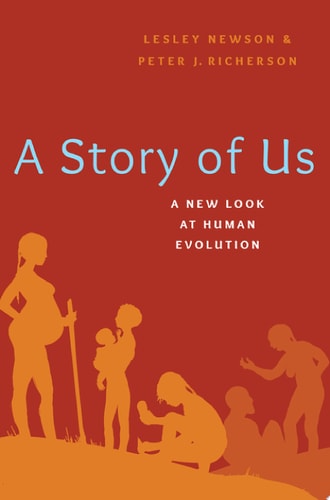
It's time for a story of human evolution that goes beyond describing "ape-men" and talks about what women and children were doing. In a few decades, a torrent of new evidence and ideas about human evolution has allowed scientists to piece together a more detailed understanding of what went on thousands and even millions of years ago. We now know much more about the problems our ancestors faced, the solutions they found, and the trade-offs they made. The drama of their experiences led to the humans we are today: an animal that relies on a complex culture. We are a species that can — and does — rapidly evolve cultural solutions as we face new problems, but the intricacies of our cultures mean that this often creates new challenges. Our species' unique capacity for culture began to evolve millions of years ago, but it only really took off in the last few hundred thousand years. This capacity allowed our ancestors to survive and raise their difficult children during times of extreme climate chaos. Understanding how this has evolved can help us understand the cultural change and diversity that we experience today. Lesley Newson and Peter Richerson, a husband-and-wife team based at the University of California, Davis, began their careers with training in biology. The two have spent years — together and individually — researching and collaborating with scholars from a wide range of disciplines to produce a deep history of humankind. In A Story of Us, they present this rich narrative and explain how the evolution of our genes relates to the evolution of our cultures. Newson and Richerson take readers through seven stages of human evolution, beginning seven million years ago with the apes that were the ancestors of humans and today's chimps and bonobos. The story ends in the present day and offers a glimpse into the future.
Menrva's Summary
THE THESIS
How did the unique human capacity for complex culture emerge as a primary driver of our evolutionary success? Lesley Newson and Peter J. Richerson, both trained in biological sciences at the University of California, Davis, synthesize decades of interdisciplinary research to argue that human evolution is defined by the co-evolution of genes and culture. They propose that our ancestors' ability to develop and transmit cultural solutions was the critical adaptation that allowed the species to survive extreme climate instability and successfully raise offspring.
THE SCOPE MAP
What You Will Find
- A seven-stage chronological framework of human evolution spanning seven million years.
- Analysis of the interplay between genetic inheritance and cultural transmission.
- Examination of how climate chaos influenced the development of human social structures.
- Insights into the role of women and children in early human survival strategies.
Scope Limits
- The text does not provide a comprehensive biological catalog of every hominid species.
- It does not focus on speculative future technology, limiting its scope to evolutionary trajectories.
THE AUTHORITY PERSPECTIVE
Experts recognize this work as a highly accessible synthesis of complex evolutionary theory that successfully bridges the gap between biology and social science. Readers frequently note that the authors' interdisciplinary approach provides a clear, structured narrative that makes dense academic concepts understandable for a general audience.
Page Count:
304
Publication Date:
2021-01-01
Publisher:
Oxford University Press
ISBN-10:
0190883227
ISBN-13:
9780190883225
Science
Sociology
Physical Anthropology
Human History
Evolution
Evolutionary Biology
Anthropology
Community Tags
Similar Books