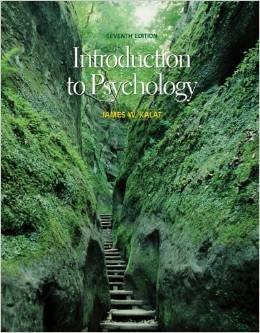
Introduction to Psychology
0
0
As an Amazon Associate and affiliate partner, Menrva Books earns from qualifying purchases. Learn more
Author Description
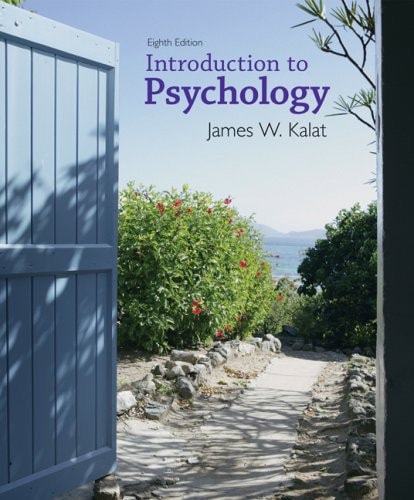
Jim Kalat's best-selling INTRODUCTION TO PSYCHOLOGY takes a "critical thinking" approach to the major theories and concerns of psychology. By prompting students to ask themselves questions like "How was this conclusion reached?" and "Does the evidence really support it?," Kalat encourages the use of scientific principles. He walks students through the hypothesis-method-results-interpretation steps that psychologists use when attempting to answer questions about human intellect, emotion, and behavior. Kalat's approach is proven to help students separate what merely sounds plausible from what is scientifically provable?both in the psychology classroom and beyond it. With his humorous writing style and hands-on "Try It Yourself" exercises, Kalat puts students at ease and gets them involved with even with the most intimidating concepts. Within each chapter, he "chunks" the material into a modular format so that students can master one idea at a time, building confidence as they go. This format makes it convenient for instructors to assign material to match the way they teach the course. Kalat's supplements package includes substantial resources for professors and students alike. Students receive a free CD-ROM with the text, free access to the Book Companion Web Site (featureing a personalized Self-Study Assessment program--see below), free access to InfoTrac College Edition, and free access to vMentor online tutoring. Instructors receive an Instructor's Resource Manual (now in a three-ring binder format), Test Bank with item analysis, and much more. See below for details.
Menrva's Summary
THE THESIS
How can students effectively distinguish between anecdotal claims and scientifically validated psychological principles? James W. Kalat, a seasoned educator, utilizes a modular framework to guide students through the rigorous hypothesis-method-results-interpretation cycle. By emphasizing critical inquiry, the text provides a structured methodology for evaluating human behavior, emotion, and cognitive processes through the lens of empirical evidence.
THE SCOPE MAP
What You Will Find
- Modular chapter organization designed for incremental mastery of complex psychological concepts.
- A critical thinking framework that prompts readers to evaluate the validity of research conclusions.
- Hands-on "Try It Yourself" exercises that translate abstract theories into practical applications.
- Comprehensive coverage of major psychological theories, human intellect, and behavioral science.
THE AUTHORITY PERSPECTIVE
This text is widely recognized in undergraduate curricula for its accessible, conversational tone and its consistent focus on scientific literacy. The modular design and emphasis on evidence-based reasoning make it a standard resource for introductory psychology courses.
Page Count:
784
Publication Date:
2005-01-01
Publisher:
Thomson; Wadsworth
ISBN-10:
0006599532
ISBN-13:
9780006599531
Science
Psychology
Counseling Psychology
Reference
Academic
Education
textbook
Community Tags
Other Editions(15)

Cengage Limited
2016
Default edition
Cengage Learning
2013

Wadsworth Cengage Learning
2011
Cengage Learning
2010

cengage
2008
Wadsworth
2007
Thomson/Wadsworth
2007

Thomson/Wadsworth
2005
Thomson; Wadsworth
2005

Thomson
2004

Thomson/Wadsworth
2004
Wadsworth-Thomson Learning
2002

Wadsworth
2000
Wadsworth Publishing
1990

Thomson Wadsworth
1900
Similar Books






Reader Comments
Share Your Thoughts
No comments yet. Be the first to share your thoughts!