Art Of Pure Cinema
0
0
As an Amazon Associate and affiliate partner, Menrva Books earns from qualifying purchases. Learn more
Author Description
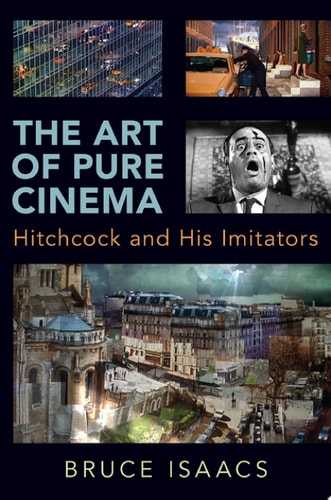
This Is Not A Book About Hitchcock. There Are Many Of Those In Critical Circles, And I Wouldn't Presume To Add A Great Deal More To The Landmark Studies Of Scholars Such As Raymond Bellour, Robin Wood, And William Rothman, Among Many Others. But It Is A Book That Attempts To Situate Hitchcockian Cinema, And More Specifically, An Aspect Of The Hitchcockian Style In The Aftermath Of Hitchcock's Rich, Complex, And Sometimes Unwieldy Filmmaking Career. In A Series Of Discussions With François Truffaut In 1962, Hitchcock, Then At The Height Of His Influence As A Filmmaker And Prior To The Perceived Decline Of His Cinema In The Later 1960s, Gestures Toward An Artistic Disposition In The Following Exchange On Rear Window (1954): Truffaut: I Imagine That The Story Appealed To You Primarily Because It Represented A Technical Challenge: A Whole Film From The Viewpoint Of One Man, And Embodied In A Single, Large Set. Hitchcock: Absolutely. It Was A Possibility Of Doing A Purely Cinematic Film. You Have An Immobilized Man Looking Out. That's One Part Of The Film. The Second Part Shows What He Sees And The Third Part Shows How He Reacts. This Is Actually The Purest Expression Of A Cinematic Idea.
Menrva's Summary
THE THESIS
This book investigates the technical and aesthetic concept of 'pure cinema' as articulated by Alfred Hitchcock and interpreted through his later career. The author, Bruce Isaacs, examines the intersection of Hitchcock's formalist challenges and his broader cinematic legacy. By analyzing specific exchanges between Hitchcock and François Truffaut, the text establishes a framework for understanding how technical constraints, such as limited perspectives and single-set environments, function as the purest expressions of cinematic ideas.
THE SCOPE MAP
What You Will Find
- Analysis of Hitchcock's technical approach to filmmaking
- Examination of the 1962 Hitchcock-Truffaut interview transcripts
- Theoretical exploration of the 'pure cinema' concept
- Case studies focusing on films like Rear Window
Scope Limits
- The book does not provide a comprehensive biography of Alfred Hitchcock
- It does not attempt to supersede existing landmark studies by scholars like Raymond Bellour or Robin Wood
THE AUTHORITY PERSPECTIVE
Experts recognize this work as a focused contribution to film theory that prioritizes technical analysis over biographical narrative. Readers frequently note the academic density of the prose, which is intended for students and scholars of cinema history.
Page Count:
0
Publication Date:
2020-01-01
Publisher:
Oxford University Press,
ISBN-10:
0190889993
ISBN-13:
9780190889999
Film Studies
Alfred Hitchcock
Influence
Cinema History
Film Theory
Directing
Community Tags
Similar Books