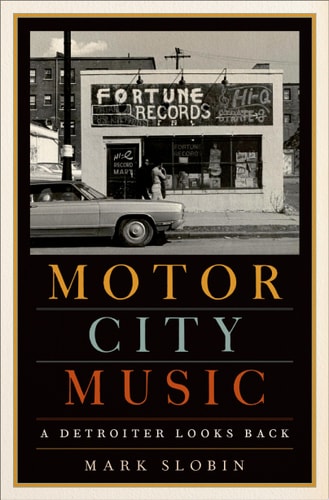
Motor City Music
0
0
As an Amazon Associate and affiliate partner, Menrva Books earns from qualifying purchases. Learn more
Author Description
This Is The First-ever Historical Study Across All Musical Genres In Any American Metropolis. Detroit In The 1940s-60s Was Not Just The Capital Of The Twentieth Century For Industry And The War Effort, But Also For The Quantity And Extremely High Quality Of Its Musicians, From Jazz To Classical To Ethnic. The Author, A Detroiter From 1943, Begins With A Reflection Of His Early Life With His Family And Others, Then Weaves Through The Music Traffic Of All The Sectors Of A Dynamic And Volatile City. Looking First At The Crucial Role Of The Public Schools In Fostering Talent, Motor City Music Surveys The Neighborhoods Of Older European Immigrants And Of The Later Huge Waves Of Black And White Southerners Who Migrated To Detroit To Serve The Auto And Defense Industries. Jazz Stars, Polka Band Leaders, Jewish Violinists, And Figures Like Lily Tomlin Emerge In The Spotlight. Shaping Institutions, From The Ford Motor Company And The United Auto Workers Through Radio Stations And Motown, All Deployed Music To Bring Together A City Rent By Relentless Segregation, Policing, And Spasms Of Violence. The Voices Of Detroit's Poets, Writers, And Artists Round Out The Chorus.
Menrva's Summary
THE THESIS
This work investigates how Detroit functioned as a central hub for diverse musical expression across all genres during the mid-twentieth century. Mark Slobin, a scholar and lifelong Detroiter, utilizes a combination of personal memoir, historical archival research, and sociological analysis to examine the city's musical landscape. He argues that music served as a vital, albeit complex, mechanism for social cohesion and identity formation in a city defined by industrial growth, migration, and intense racial and economic segregation.
THE SCOPE MAP
What You Will Find
- Historical analysis of Detroit's musical output from the 1940s through the 1960s.
- Examination of the role of public schools in talent development.
- Documentation of diverse musical scenes including jazz, classical, ethnic, and Motown.
- Analysis of institutional influences such as the Ford Motor Company and the United Auto Workers.
Scope Limits
- The text focuses primarily on the mid-twentieth century and does not provide a comprehensive history of Detroit music beyond that era.
- The study prioritizes social and institutional contexts over technical musicological analysis of specific compositions.
THE AUTHORITY PERSPECTIVE
Experts recognize this text as a significant contribution to urban cultural history, noting its unique blend of personal narrative and rigorous historical documentation. Readers frequently highlight the author's ability to connect the city's industrial identity with its diverse musical output, making it a valuable resource for those interested in the intersection of music and social geography.
Page Count:
256
Publication Date:
2018-01-01
Publisher:
Oxford University Press
ISBN-10:
0190882093
ISBN-13:
9780190882099
Sociology
American History
Urban Studies
Cultural History
Music History
Community Tags
Similar Books