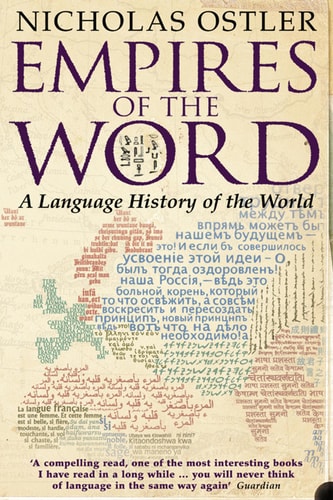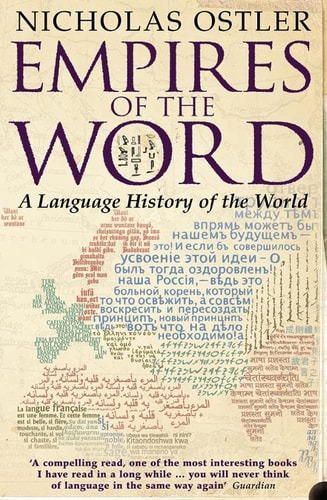
Empires of the Word
0
0
As an Amazon Associate and affiliate partner, Menrva Books earns from qualifying purchases. Learn more
Author Description
An unusual and authoritative 'natural history of languages' that narrates the ways in which one language has superseded or outlasted another at different times in history. The story of the world in the last five thousand years is above all the story of its languages. Some shared language is what binds any community together, and makes possible both the living of a common history and the telling of it. Yet the history of the world's great languages has rarely been examined. 'Empires of the Word' is the first to bring together the tales in all their glorious variety: the amazing innovations -- in education, culture and diplomacy -- devised by speakers in the Middle East; the uncanny resilience of Chinese throughout twenty centuries of invasions; the progress of Sanskrit from north India to Java and Japan; the struggle that gave birth to the languages of modern Europe; and the global spread of English. Besides these epic achievements, language failures are equally fascinating: why did Germany get left behind? Why did Egyptian, which had survived foreign takeovers for three millennia, succumb to Mohammed's Arabic? Why is Dutch unknown in modern Indonesia, given that the Netherlands had ruled the East Indies for as long as the British ruled India? As this book engagingly reveals, the language history of the world shows eloquently the real characters of peoples; it also shows that the language of the future will, like the languages of the past, be full of surprises.
Menrva's Summary
THE THESIS
This work investigates the historical mechanisms by which specific languages achieve global dominance or face extinction over the course of five millennia. Nicholas Ostler, a scholar of linguistics and classical studies, synthesizes vast historical data to argue that the success of a language is rarely determined by military might alone, but rather by the cultural, diplomatic, and educational innovations of its speakers. The text provides a comparative framework to analyze why certain tongues persist through centuries of upheaval while others vanish despite long-standing institutional support.
THE SCOPE MAP
What You Will Find
- Comparative analysis of language survival in the Middle East, Asia, and Europe.
- Examination of the resilience of Chinese and the expansion of Sanskrit.
- Case studies on language failure, including the decline of Egyptian and the limited linguistic legacy of Dutch colonialism.
- Theoretical framework regarding the intersection of diplomacy, education, and linguistic spread.
THE AUTHORITY PERSPECTIVE
This text is regarded as a comprehensive and scholarly examination of linguistic history that challenges conventional narratives about imperial expansion. The depth of research and the breadth of the geographical scope make it a significant resource for readers interested in the intersection of culture and communication.
Page Count:
688
Publication Date:
2006-01-01
Publisher:
HarperCollins Publishers
ISBN-10:
0007118716
ISBN-13:
9780007118717
History
Non-Fiction
Educational Resources
Linguistics
New Used & Rental Textbooks
Language
World history
Foreign Study
World
Alphabet
Sociology
Words Language & Grammar
Reference
Community Tags
Other Editions(2)
Similar Books