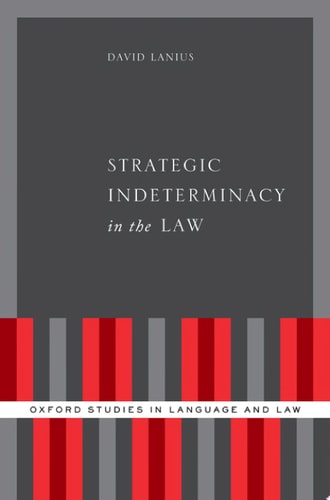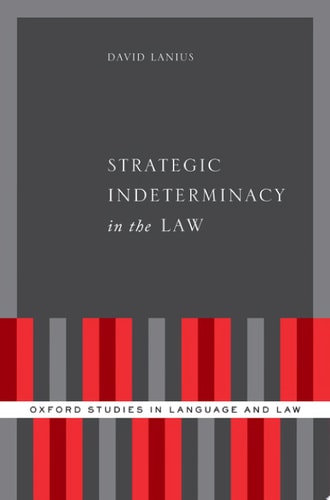
Strategic Indeterminacy In The Law
0
0
As an Amazon Associate and affiliate partner, Menrva Books earns from qualifying purchases. Learn more
Author Description
Though Indeterminacy In Legal Texts Is Pervasive, There Is A Widespread Misunderstanding About What Indeterminacy Is, Particularly As It Pertains To Law. Legal Texts Present Unique Challenges Insofar As They Address A Heterogeneous Audience, Are Applied In A Variety Of Unforeseeable Circumstances And Must, At The Same Time, Lay Down Clear And Unambiguous Standards. Sometimes They Fail To Do So, However, Either By Accident Or By Intention. While Many Have Claimed That Indeterminacy Facilitates Flexibility And Can Be Strategically Used, Few Have Recognized That There Are More Forms Of Indeterminacy Than Vagueness And Ambiguity. A Comprehensive Account Of Legal Indeterminacy Is Thus Called For. David Lanius Here Answers That Call And In So Doing, Addresses Three Central Questions About The Role Of Indeterminacy In The Law. First, What Are The Sources Of Indeterminacy In Law? Second, What Effects Do The Different Forms Of Indeterminacy Have? Third, How Can And Should These Forms Be Intentionally Used? Based On A Thorough Examination Of The Advantages And Disadvantages Of The Different Forms Of Indeterminacy In The Wording Of Laws, Contracts, And Verdicts, Lanius Argues For The Claim That Semantic Vagueness Is Less Relevant Than Commonly Supposed In The Debate, While Other Forms Of Indeterminacy (in Particular, Polysemy And Standard-relativity) Are Mistakenly Underrated Or Even Ignored. This Misconception Is Due To A Systematic Confusion Between Semantic Vagueness And These Other Forms Of Indeterminacy. Once It Is Resolved, The Value And Functions Of Linguistic Indeterminacy In The Law Can Be Clearly Shown.
Menrva's Summary
THE THESIS
This book investigates the nature, sources, and strategic utility of indeterminacy within legal texts, challenging the prevailing focus on semantic vagueness. David Lanius, a scholar in philosophy and legal theory, provides a systematic framework to distinguish between various linguistic forms of indeterminacy. By analyzing how laws, contracts, and verdicts are constructed, he argues that practitioners often misidentify the mechanisms of ambiguity, thereby overlooking more significant forms such as polysemy and standard-relativity.
THE SCOPE MAP
What You Will Find
- A taxonomy of linguistic indeterminacy including vagueness, polysemy, and standard-relativity.
- An analysis of the strategic application of indeterminate language in legal drafting.
- A comparative evaluation of the advantages and disadvantages of specific linguistic choices in legal documents.
Scope Limits
- The text does not provide a comprehensive guide to courtroom litigation strategies.
- It does not cover the historical evolution of specific national legal systems.
THE AUTHORITY PERSPECTIVE
Scholars in jurisprudence and philosophy of language identify this work as a rigorous contribution to the study of legal interpretation. Readers frequently note the academic density of the prose, which is intended for an audience familiar with analytical philosophy and legal theory.
Page Count:
304
Publication Date:
2019-01-01
Publisher:
Oxford University Press
ISBN-10:
0190923709
ISBN-13:
9780190923709
Jurisprudence
Semantics Law
Legal Theory
Law
Philosophy of
Linguistics