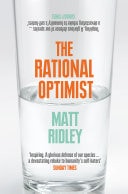
The Rational Optimist: How Prosperity Evolves
0
0
As an Amazon Associate and affiliate partner, Menrva Books earns from qualifying purchases. Learn more
Author Description
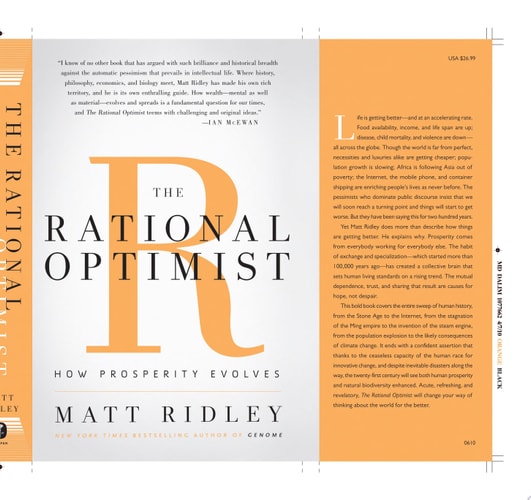
Over 10,000 years ago there were fewer than 10 million people on the planet. Today there are more than 6 billion, 99 per cent of whom are better fed, better sheltered, better entertained and better protected against disease than their Stone Age ancestors.The availability of almost everything a person could want or need has been going erratically upwards for 10,000 years and has rapidly accelerated over the last 200 years: calories; vitamins; clean water; machines; privacy; the means to travel faster than we can run, and the ability to communicate over longer distances than we can shout. Yet, bizarrely, however much things improve from the way they were before, people still cling to the belief that the future will be nothing but disastrous.In this original, optimistic book, Matt Ridley puts forward his surprisingly simple answer to how humans progress, arguing that we progress when we trade and we only really trade productively when we trust each other.The Rational Optimist will do for economics what Genome did for genomics and will show that the answer to our problems, imagined or real, is to keep on doing what we've been doing for 10,000 years – to keep on changing.
Menrva's Summary
THE THESIS
How does the human species continue to achieve unprecedented levels of prosperity despite persistent cultural pessimism? Matt Ridley, a science writer with a background in zoology, synthesizes evolutionary biology, history, and economic theory to argue that human progress is driven by the unique human capacity for exchange and specialization. He posits that the expansion of trade networks, facilitated by increasing levels of trust, creates a collective intelligence that solves problems and improves living standards over time.
THE SCOPE MAP
What You Will Find
- Historical analysis of human population growth and resource availability over the last 10,000 years.
- The theory of 'ideas sex' as the primary engine for technological and cultural innovation.
- Case studies comparing isolated societies with those integrated into global trade networks.
- An examination of the psychological roots of pessimism and why humans are predisposed to fear the future.
THE AUTHORITY PERSPECTIVE
The work is regarded as a provocative contribution to the debate on human development, drawing both praise for its synthesis of diverse disciplines and criticism for its dismissal of environmental and systemic risks. The text functions as a broad, accessible argument for market-based optimism that challenges contemporary narratives of decline.
Page Count:
448
Publication Date:
2010-05-20
Publisher:
HarperCollins
ISBN-10:
000737481X
ISBN-13:
9780007374816
Non-Fiction
Science
History
Philosophy
Economics
Sociology
Wealth
Social change
Reason
Optimism
Progress
Practical reason
Nonfiction