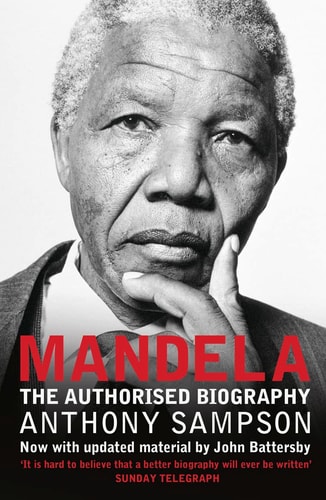
Mandela: The Authorised Biography
0
0
As an Amazon Associate and affiliate partner, Menrva Books earns from qualifying purchases. Learn more
Author Description
In 1975, imprisoned for life on Robben Island, Nelson Mandela covertly wrote his autobiography. After painstaking months the text was smuggled out--and was promptly quashed by the African National Congress. In his later Long Walk to Freedom Mandela politely expresses "surprise" at this. Sampson reveals that Joe Slovo suppressed the book for not giving enough prominence to Communists. This revelation is remarkable--the ANC could have made much mileage from the book at a time of low fortune--yet Sampson does not follow up. There is too often a sense of eggshells lightly walked upon.Mandela improves as the prisoner's release approaches. Sampson sharply exposes the machinations of those undermining the ANC's struggle. The CIA knew of the Third Force years before the ANC, yet said nothing. Right-wing governments attacked "Mandela the Communist", preferring to promote Inkhata's Buthelezi, at that time secretly and violently colluding with de Klerk's apartheid regime. Against the small-minded figures of Reagan, Thatcher and Kohl it is Mandela who emerges here a giant. South Africa won her freedom through Mandela: his strength of character and willingness to forgive helped push a country into an alternative future, avoiding the racial civil war almost all predicted. Yet he and his kin paid an awful price. Sampson draws a painful, clear picture of a disintegrating family: dislocation from children; the terrible effects of the war on Winnie, and her increasingly erratic, later murderous behaviour; Mandela's own aching loneliness. It is in capturing Madiba, the ultimate public figure, at his most intense and private, that Sampson's Mandela succeeds best. --Chris Woods
Menrva's Summary
THE THESIS
This biography investigates the complex interplay between Nelson Mandela’s personal sacrifice and the political machinations that shaped the transition of South Africa from apartheid to democracy. Anthony Sampson, a long-time observer of South African politics, utilizes his deep access and historical context to examine the internal conflicts within the African National Congress and the external pressures exerted by global powers. The work argues that while Mandela’s character was the primary force in preventing civil war, his public leadership came at a profound cost to his private life and family stability.
THE SCOPE MAP
What You Will Find
- Historical analysis of the ANC’s internal power struggles and the suppression of early autobiographical writings.
- Documentation of the clandestine collusion between the apartheid regime and international political figures.
- Examination of the personal toll of imprisonment on Mandela’s family, specifically the psychological impact on Winnie Mandela.
- Assessment of Mandela’s role in navigating the transition to a post-apartheid state while managing the expectations of diverse political factions.
THE AUTHORITY PERSPECTIVE
This work is regarded as a nuanced, if occasionally cautious, examination of Mandela’s life that balances political history with intimate biographical detail. The text provides a critical perspective on the global geopolitical landscape of the late twentieth century while maintaining a focus on the human cost of the struggle for freedom.
Page Count:
704
Publication Date:
2011-05-05
Publisher:
HarperCollins Publishers
ISBN-10:
0007437978
ISBN-13:
9780007437979
Politics
History
Biography
Apartheid
Leaders & Notable People
Military
Africa
Historical
Political
Ethnic & National
South Africa
Community Tags
Other Editions(2)

Similar Books