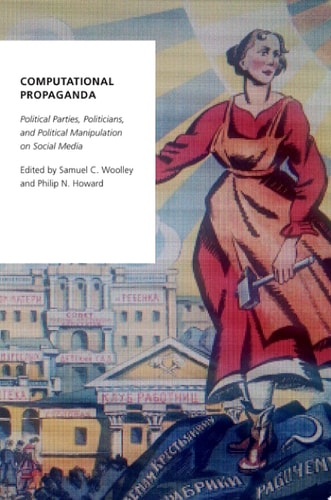
Computational Propaganda
0
0
As an Amazon Associate and affiliate partner, Menrva Books earns from qualifying purchases. Learn more
Author Description
Social Media Platforms Do Not Just Circulate Political Ideas, They Support Manipulative Disinformation Campaigns. While Some Of These Disinformation Campaigns Are Carried Out Directly By Individuals, Most Are Waged By Software, Commonly Known As Bots, Programmed To Perform Simple, Repetitive, Robotic Tasks. Some Social Media Bots Collect And Distribute Legitimate Information, While Others Communicate With And Harass People, Manipulate Trending Algorithms, And Inundate Systems With Spam. Campaigns Made Up Of Bots, Fake Accounts, And Trolls Can Be Coordinated By One Person, Or A Small Group Of People, To Give The Illusion Of Large-scale Consensus. Some Political Regimes Use Political Bots To Silence Opponents And To Push Official State Messaging, To Sway The Vote During Elections, And To Defame Critics, Human Rights Defenders, Civil Society Groups, And Journalists. This Book Argues That Such Automation And Platform Manipulation, Amounts To A New Political Communications Mechanism That Samuel Woolley And Philip N. Noward Call Computational Propaganda. This Differs From Older Styles Of Propaganda In That It Uses Algorithms, Automation, And Human Curation To Purposefully Distribute Misleading Information Over Social Media Networks While It Actively Learns From And Mimicks Real People So As To Manipulate Public Opinion Across A Diverse Range Of Platforms And Device Networks. This Book Includes Cases Of Computational Propaganda From Nine Countries (both Democratic And Authoritarian) And Four Continents (north And South America, Europe, And Asia), Covering Propaganda Efforts Over A Wide Array Of Social Media Platforms And Usage In Different Types Of Political Processes (elections, Referenda, And During Political Crises).
Menrva's Summary
THE THESIS
This book investigates how the integration of automated software, algorithms, and human curation on social media platforms creates a new mechanism for political manipulation known as computational propaganda. Authors Philip N. Howard and Samuel C. Woolley, both prominent researchers in the field of digital politics, analyze how these tools are utilized to manufacture the illusion of consensus and suppress dissent. They argue that this modern form of propaganda represents a significant shift from traditional methods by leveraging machine learning to mimic human behavior and influence public opinion at scale.
THE SCOPE MAP
What You Will Find
- Comparative analysis of propaganda campaigns across nine countries and four continents.
- Examination of bot usage in elections, referenda, and political crises.
- Framework for understanding the intersection of platform algorithms and political messaging.
- Case studies involving both democratic and authoritarian political regimes.
Scope Limits
- The text does not provide a technical manual for building or deploying bot networks.
- It does not offer a comprehensive legal guide for regulating social media platforms.
THE AUTHORITY PERSPECTIVE
Experts and academics frequently cite this work as a foundational text for understanding the mechanics of digital disinformation and political automation. Readers often note the academic density of the prose, which provides a rigorous, data-driven look at how social media infrastructure is weaponized in contemporary political environments.
Page Count:
256
Publication Date:
2018-01-01
Publisher:
Oxford University Press
ISBN-10:
0190931426
ISBN-13:
9780190931421
Technology
Media Studies
Communication
Sociology
Community Tags
Similar Books