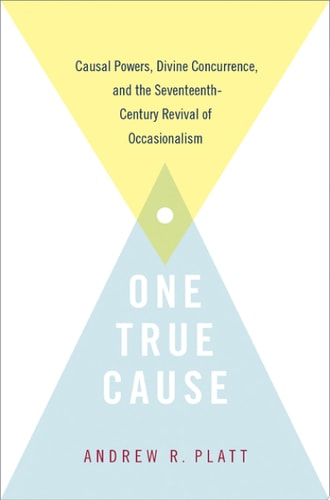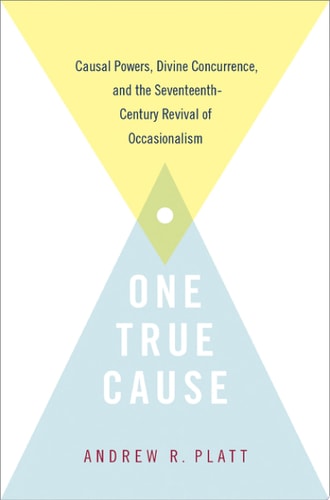
One True Cause
0
0
As an Amazon Associate and affiliate partner, Menrva Books earns from qualifying purchases. Learn more
Author Description
Occasionalism Is The Thesis That God Alone Is The True Cause Of Everything That Happens In The World, And Created Substances Are Merely Occasional Causes. This Doctrine Was Originally Developed In Medieval Islamic Theology, And Was Widely Rejected In The Works Of Christian Authors In Medieval Europe. Yet Despite Its Heterodoxy, Occasionalism Was Revived In The 1660s By Followers Of The Philosophy Of René Descartes, Perhaps The Most Famous Among Them The French Philosopher Nicolas Malebranche, Who Popularized This Doctrine. What Led Cartesian Thinkers To Adopt Occasionalism? Since The 1970s Has There Been A Growing Body Of Literature On Malebranche And The Movement He Engendered. There Is Also A New And Growing Body Of Work On The Cartesian Occasionalists Before Malebranche--including Arnold Geulincx, Geraud De Cordemoy, And Louis De La Forge. But To Date There Has Not Been A Systematic, Book-length Study Of The Reasoning That Led Cartesian Thinkers To Adopt Occasionalism, And The Relationship Of Their Arguments To Descartes' Own Views. This Book Expands On Recent Scholarship To Provide The First Comprehensive Account Of Seventeenth Century Occasionalism. Part I Contrasts Occasionalism With A Theory Of Divine Providence Developed By Thomas Aquinas, In Response To Medieval Occasionalists; It Shows That Descartes' Philosophy Is Compatible With Aquinas' Theory, On Which God Concurs In All The Actions Of Created Beings. Part Ii Reconstructs The Arguments Of Cartesians--such As Cordemoy And La Forge--who Used Cartesian Physics To Argue For Occasionalism. Finally, The Book Shows How Malebranche's Case For Occasionalism Combines Philosophical Theology With Cartesian Metaphysics And Mechanistic Science.
Menrva's Summary
THE THESIS
This book investigates the philosophical reasoning that led seventeenth-century Cartesian thinkers to adopt the doctrine of occasionalism and examines its relationship to the foundational views of René Descartes. Andrew R. Platt provides a systematic analysis of the transition from Cartesian physics to the occasionalist conclusion that God is the sole true cause of all worldly events. By synthesizing historical theology with metaphysical inquiry, the author evaluates how thinkers like Cordemoy, La Forge, and Malebranche diverged from earlier scholastic models of divine concurrence.
THE SCOPE MAP
What You Will Find
- A comparative analysis of occasionalism versus the Thomistic theory of divine providence.
- Reconstructions of arguments from early Cartesian occasionalists including Arnold Geulincx, Geraud de Cordemoy, and Louis de La Forge.
- An examination of how Malebranche integrated mechanistic science with philosophical theology.
Scope Limits
- The text focuses specifically on the seventeenth-century development of the doctrine.
- It does not provide an exhaustive history of medieval Islamic occasionalism beyond its role as a point of contrast.
THE AUTHORITY PERSPECTIVE
This work serves as a specialized study for scholars of early modern philosophy and Cartesian metaphysics. Experts note that it fills a significant gap in the literature by providing the first systematic, book-length account of the arguments that drove the occasionalist movement.
Page Count:
272
Publication Date:
2020-01-01
Publisher:
Oxford University Press
ISBN-10:
0190941804
ISBN-13:
9780190941802
Philosophy
Metaphysics
Cartesianism
Philosophy history
Theology
Community Tags
Similar Books