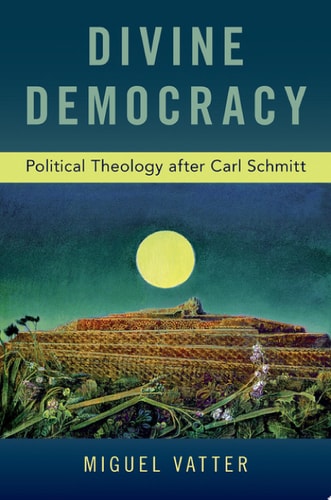
Divine Democracy
0
0
As an Amazon Associate and affiliate partner, Menrva Books earns from qualifying purchases. Learn more
Author Description
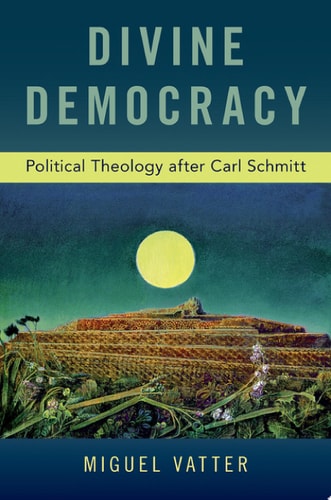
How Secular Are The Political And Legal Concepts That Underpin Liberal Democracy? Carl Schmitt First Coined The Term Political Theology To Show The Dependency Of Modern Western Jurisprudence And Political Science On Christian Theological Discourse, And In So Doing Criticized The Claim To Religious Neutrality Of Liberal Institutions. In This Book, Miguel Vatter Reconstructs How And Why The Discourse Of Political Theology Was Adopted And Repurposed By Anti-schmittian Thinkers, From Eric Voegelin Through Jacques Maritain And Ernst Kantorowicz To Jürgen Habermas, To Bolster The Legitimacy Of Liberal Democratic Government. The Book Traces The Way In Which Crucial Political Concepts For Liberal Democracy--including Sovereignty, Representation, Government, Constitutionalism, Human Rights, And Public Reason--are Transformed When They Become Part Of A Discourse On Political Theology. Vatter's Aim Is To Provide An Intellectual History Of Political Theology In The 20th Century. His Study Reveals The Overdetermined Role That Religion Plays In Contemporary Democratic Political And Legal Theory As An Ultimate Source Of Legitimacy For Government And As Wellspring For Revolutionary Aspirations.
Menrva's Summary
THE THESIS
This book investigates the extent to which modern liberal democratic institutions and legal concepts rely on theological foundations rather than secular neutrality. Miguel Vatter, a scholar of political philosophy, examines the 20th-century intellectual history of political theology to challenge the assumption that Western governance is purely secular. By analyzing the works of thinkers such as Eric Voegelin, Jacques Maritain, Ernst Kantorowicz, and Jürgen Habermas, Vatter argues that these figures repurposed theological discourse to provide legitimacy to liberal democratic frameworks.
THE SCOPE MAP
What You Will Find
- An intellectual history of political theology throughout the 20th century.
- Analysis of key concepts including sovereignty, representation, constitutionalism, and human rights.
- A critical examination of the transition from Carl Schmitt's original critique to the anti-Schmittian appropriation of theological language.
Scope Limits
- The text focuses primarily on Western political and legal theory rather than non-Western governance models.
- The analysis is restricted to the specific lineage of 20th-century thinkers mentioned and does not provide an exhaustive survey of all political theology.
THE AUTHORITY PERSPECTIVE
Scholars in political theory recognize this work as a rigorous contribution to the study of how religious concepts continue to inform secular governance. Readers frequently note the academic density of the prose, which requires a strong background in political philosophy to fully grasp the nuances of the arguments presented.
Page Count:
304
Publication Date:
2020-01-01
Publisher:
Oxford University Press
ISBN-10:
0190942371
ISBN-13:
9780190942373
Philosophy
Intellectual History
Jurisprudence
Liberal Democracy
Political theology
Community Tags
Similar Books