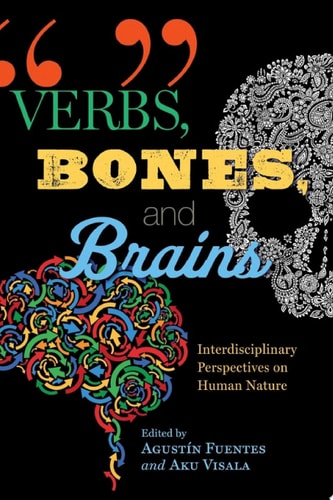
Verbs, Bones, and Brains: Interdisciplinary Perspectives on Human Nature
0
0
As an Amazon Associate and affiliate partner, Menrva Books earns from qualifying purchases. Learn more
Author Description
The last few decades have seen an unprecedented surge of empirical and philosophical research into the evolutionary history of Homo sapiens, the origins of the mind/brain, and human culture. This research and its popular interpretations have sparked heated debates about the nature of human beings and how knowledge about humans from the sciences and humanities should be properly understood. The goal of Verbs, Bones, and Brains: Interdisciplinary Perspectives on Human Nature is to engage these themes and present current debates, discussions, and discourse for a range of readers. The contributors bring the discussion to life with key experts outlining major concepts paired with cross-disciplinary commentaries in order to create a novel approach to thinking about, and with, human natures. The intent of the contributors to this volume is not to enter into or adjudicate complex philosophical issues of an epistemological or metaphysical nature. Instead, their common concern is to set aside the rigid distinctions between biology and culture that have made such discussions problematic. First, informing their approach is an acknowledgment of the widespread disagreement about such basic metaphysical and epistemological questions as the existence of God, the nature of scientific knowledge, and the existence of essences, among other topics. Second, they try to identify and explicate the assumptions that enter into their conceptualizations of human nature. Throughout, they emphasize the importance of seeking a convergence in our views on human nature, despite metaphysical disagreements. They caution that if convergence eludes us and a common ground cannot be found, this is itself a relevant result: it would reveal to us how deeply our questions about ourselves are connected to our basic metaphysical assumptions. Instead, their focus is on how the interdisciplinary and possibly transdisciplinary conversation can be enhanced in order to identify and develop a common groun
Menrva's Summary
THE THESIS
This volume investigates the complex and often contentious topic of human nature by synthesizing insights from evolutionary biology, philosophy, and anthropology. The book aims to bridge the gap between scientific and humanistic understandings of what it means to be human, moving beyond rigid distinctions between biology and culture. It acknowledges widespread metaphysical and epistemological disagreements among scholars but seeks to identify common ground and explicate the underlying assumptions in conceptualizations of human nature. The contributors emphasize that even if a complete convergence of views eludes them, the process of seeking common ground reveals the deep connection between our questions about ourselves and our fundamental metaphysical beliefs.
THE SCOPE MAP
- Interdisciplinary perspectives on human nature drawing from evolutionary biology, philosophy, and anthropology.
- Discussions on the origins of the mind/brain and human culture.
- Analysis of current debates and popular interpretations of research into Homo sapiens.
- Cross-disciplinary commentaries from key experts.
- An approach that sets aside rigid distinctions between biology and culture.
- Explication of assumptions underlying various conceptualizations of human nature.
- Emphasis on seeking convergence in views on human nature despite metaphysical disagreements.
THE AUTHORITY PERSPECTIVE
The book is presented as a collection of current debates and discussions on human nature, intended for a range of readers. Its approach emphasizes interdisciplinary dialogue, aiming to foster a common ground in understanding human nature by setting aside rigid distinctions between biology and culture. The contributors acknowledge fundamental disagreements in metaphysical and epistemological questions but focus on identifying shared assumptions and potential areas of convergence. The volume's success would lie in its ability to enhance the interdisciplinary conversation, even if a complete consensus remains elusive.
Page Count:
312
Publication Date:
2017-01-15
Publisher:
University of Notre Dame Press
ISBN-10:
0268101175
ISBN-13:
9780268101176
Non-Fiction
Science
Philosophy
Anthropology
Evolutionary Biology
Human Nature
Community Tags
Similar Books












Reader Comments
Share Your Thoughts
No comments yet. Be the first to share your thoughts!