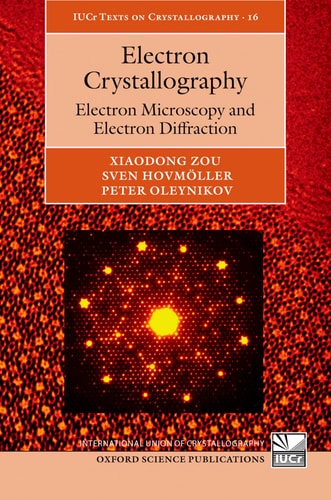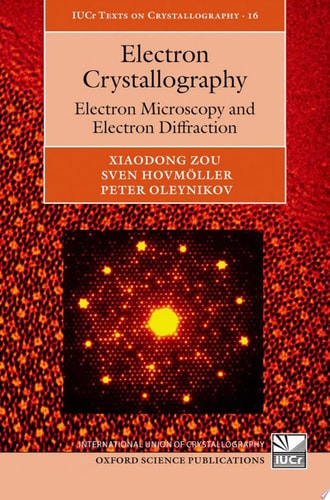
Electron Crystallography: Electron Microscopy and Electron Diffraction
0
0
As an Amazon Associate and affiliate partner, Menrva Books earns from qualifying purchases. Learn more
Author Description
In the modern world of ever smaller devices and nanotechnology, electron crystallography emerges as the most important method capable of determining the structure of minute objects down to the size of individual atoms. Crystals of only a few millionths of a millimetre are studied. This is the first textbook explaining how this is done. Great attention is given to symmetry in crystals and how it manifests itself in electron microscopy and electron diffraction, and how this symmetry can be determined and taken advantage of in achieving improved electron microscopy images and solving crystal structures from electron diffraction patterns. Theory and practice are combined; experimental images, diffraction patterns, formulae and numerical data are discussed in parallel, giving the reader a complete understanding of what goes on inside the "black boxes" of computer programs. This up-to-date textbook contains the newest techniques in electron crystallography, including detailed descriptions and explanations of the recent remarkable successes in determining the very complex structures of zeolites and intermetallics. The controversial issue of whether there is phase information present in electron micrsocopy images or not is also resolved once and for all. The extensive appendices include computer labs which have been used at various courses at Stockholm University and international schools in electron crystallography, with applications to the textbook. Students can download image processing programs and follow these lab instructions to get a hands-on experience of electron crystallography.
Menrva's Summary
THE THESIS
This text investigates the methodologies and theoretical foundations required to determine the atomic structures of minute crystals using electron microscopy and electron diffraction. The authors, experts in the field of structural chemistry and microscopy, provide a comprehensive framework that bridges the gap between abstract physical theory and practical laboratory application. By integrating experimental data with computational analysis, the book addresses the technical challenges inherent in visualizing structures at the nanometer scale.
THE SCOPE MAP
What You Will Find
- Principles of crystal symmetry and its manifestation in diffraction patterns
- Techniques for image processing and structural determination of zeolites and intermetallics
- Practical laboratory exercises and software applications for hands-on learning
- Analysis of phase information in electron microscopy images
Scope Limits
- The text focuses specifically on electron crystallography and does not cover broader X-ray diffraction methods
- It assumes a foundational understanding of physics and chemistry at the undergraduate level
THE AUTHORITY PERSPECTIVE
Experts recognize this work as a foundational textbook for students and researchers entering the field of electron crystallography. Readers frequently note the balance between theoretical rigor and the inclusion of practical, accessible computer labs for skill development.
Page Count:
344
Publication Date:
2011-01-01
Publisher:
OUP Oxford
ISBN-10:
0191004804
ISBN-13:
9780191004803
Science
Chemistry
Physics
Earth Sciences
textbook
Nanotechnology