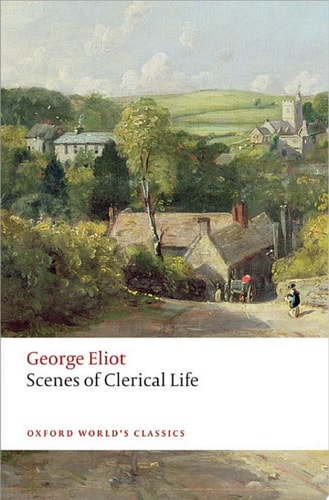
Scenes of Clerical Life
0
0
As an Amazon Associate and affiliate partner, Menrva Books earns from qualifying purchases. Learn more
Author Description
'the only true knowledge of our fellow-man is that which enables us to feel with him' George Eliot's first published work consisted of three short novellas: 'The Sad Fortunes of the Reverend Amos Barton', 'Mr Gilfil's Love-Story', and 'Janet's Repentance'. Their depiction of the lives of ordinary men and women in a provincial Midlands town initiated a new era of nineteenth-century literary realism. The tales concern rural members of the clergy and the gossip and factions that a small town generates around them. Amos Barton only realizes how much he depends upon his wife's selfless love when she dies prematurely; Mr Gilfil's devotion to a girl who loves another is only fleetingly rewarded; and Janet Dempster suffers years of domestic abuse before the influence of an Evangelical minister turns her life around. These stories are remarkable for the tenderness with which Eliot portrays a bygone time of religious belief in a newly secular age, giving literary fiction an alternative language to religion and philosophy for the observation and understanding of human experience.
Menrva's Summary
THE PULSE
The lives of three provincial clergymen and their communities are examined through the lens of moral struggle and social scrutiny. George Eliot presents a series of three novellas that explore the internal and external pressures faced by ordinary individuals in a Midlands town. The narrative framework utilizes a third-person omniscient perspective to dissect the social dynamics, gossip, and religious tensions of the nineteenth-century rural environment. Each protagonist faces a distinct crisis of faith, love, or domestic stability, forcing them to confront the limitations of their own character and the expectations of their neighbors.
INSIDE THE PAGES
- Focus on the psychological interiority of rural clergy members
- Detailed observation of provincial social hierarchies and gossip
- Exploration of the tension between religious tradition and secular change
- Examination of domestic abuse and marital devotion
- Use of irony to highlight human fallibility
- Emphasis on empathy as a primary moral imperative
- Realistic depiction of nineteenth-century Midlands life
- Structural division into three distinct, interconnected novellas
THE COLLECTIVE ECHO
Readers and critics frequently identify this work as the foundational text for Eliot's later, more expansive novels. Discussion often centers on the author's shift toward psychological realism and her ability to find significance in the mundane lives of ordinary people. Many highlight the balance between the author's sympathetic portrayal of her characters and her sharp critique of small-town social pressures. The pacing is noted for its deliberate, observational quality, which allows for deep character development within a limited narrative scope. Scholars often point to these stories as the moment Eliot established her signature voice, blending philosophical inquiry with a grounded, humanistic focus.
Page Count:
401
Publication Date:
2015-01-01
Publisher:
OUP Oxford
ISBN-10:
0191003751
ISBN-13:
9780191003752
Historical Fiction
Classic Literature
Realism
Religious Fiction
English & College Success
England
Short Stories
English
Victorian
Clergy
Community Tags
Other Editions(7)





Similar Books













Reader Comments
Share Your Thoughts
No comments yet. Be the first to share your thoughts!