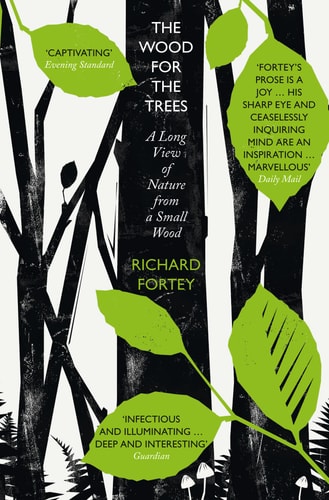
The Wood for the Trees: The Long View of Nature from a Small Wood
0
0
As an Amazon Associate and affiliate partner, Menrva Books earns from qualifying purchases. Learn more
Author Description
This biography of a beech-and-bluebell wood through diverse moods and changing seasons combines stunning natural history with the ancient history of the countryside to tell the full story of the British landscape. Drawing upon a lifetime of scientific expertise and abiding love of nature, Fortey uses his small wood to tell a wider story of the ever-changing British landscape, human influence on the countryside over many centuries and the vital interactions between flora, fauna and fungi. The trees provide a majestic stage for woodland animals and plants to reveal their own stories. Fortey presents his wood as an interwoven collection of different habitats rich in species. His attention ranges from the beech and cherry trees that dominate the wood to the flints underfoot; the red kites and woodpeckers that soar overhead; the lichens, mosses and liverworts decorating the branches as well as the myriad species of spiders, moths, beetles and crane-flies. The 300 species of fungi identified in the wood capture his attention as much as familiar deer, shrews and dormice. Fortey is a naturalist who believes that all organisms are as interesting as human beings and certainly more important than the observer. -- [Source inconnue].
Menrva's Summary
THE THESIS
This book investigates the intricate ecological and historical narratives contained within a single British woodland. Drawing on a lifetime of scientific expertise, Richard Fortey uses a small beech-and-bluebell wood as a microcosm to explore the broader story of the British landscape. The narrative weaves together natural history, from dominant trees to the smallest invertebrates and fungi, with the ancient history of human influence on the countryside over centuries, revealing the vital interactions between flora, fauna, and fungi.
THE SCOPE MAP
- Detailed natural history of a specific beech-and-bluebell wood across seasons.
- Exploration of the ancient history of the British countryside and human impact.
- Interactions between flora, fauna, and fungi, including trees, animals, plants, lichens, mosses, liverworts, spiders, moths, beetles, crane-flies, fungi, deer, shrews, and dormice.
- Coverage of over 300 species of fungi identified within the wood.
- Analysis of the role of trees like beech and cherry as a habitat.
- Discussion of the geological elements underfoot, such as flints.
- Observation of avian life, including red kites and woodpeckers.
THE AUTHORITY PERSPECTIVE
The book is presented as a comprehensive exploration of a woodland ecosystem, blending detailed natural history with historical context. The author's extensive scientific background is highlighted as a key asset in detailing the complex interdependencies within the wood. The narrative approach focuses on the wood as a rich collection of diverse habitats, emphasizing the importance of all organisms. The reception, as inferred from the description, suggests a work that appeals to readers interested in detailed ecological observation and the historical layering of the British landscape.
Page Count:
320
Publication Date:
2017-01-01
Publisher:
HarperCollins Publishers Limited
ISBN-10:
0008104697
ISBN-13:
9780008104696
History
Non-Fiction
Nature
Natural History
Great Britain
Nature
Forests rainforests
Biology
Life sciences
Ecology
Europe
Zoology
Science
Botany
Mycology
Earth Sciences
Geology
Community Tags
Similar Books