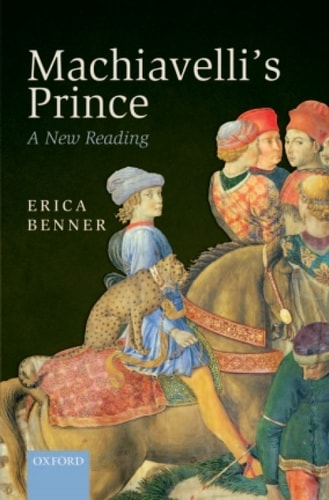
Machiavelli's Prince: A New Reading
0
0
As an Amazon Associate and affiliate partner, Menrva Books earns from qualifying purchases. Learn more
Author Description
Why did Machiavelli write the Prince - and why did religious and political authorities find it so threatening? Five hundred years on, this book tries to answer these questions. In the first detailed, chapter-by-chapter reading of the Prince in any language, Erica Benner shows that the book is a masterpiece of ironic writing. Machiavelli's style is deliberately ambiguous: he often seems to say one thing, but gives readers clues that point toward a very different message. Beyond its 'Machiavellian' surface, the Prince has a surprisingly moral purpose. It teaches readers how to recognize hidden dangers in political conduct that merely appears great or praiseworthy - and to mistrust promises of easy solutions to political problems. This highly engaging new interpretation helps readers to see beyond the Prince's deceptive first appearances. Benner sets out Machiavelli's main ironic techniques at the outset, especially his coded use of words to signal praise or blame. Once readers become familiar with these codes, they will find it easier to grasp the Prince's surreptitiously pro-republican message - and its powerful critique of charismatic one-man rule and imperial politics.
Menrva's Summary
THE THESIS
This book investigates the core question of why Machiavelli authored The Prince and why his work was perceived as a threat by contemporary religious and political authorities. Erica Benner, a scholar of political philosophy, utilizes a detailed, chapter-by-chapter analysis to argue that the text is a sophisticated exercise in irony. She posits that Machiavelli employed deliberate ambiguity and coded language to critique charismatic one-man rule and promote republican ideals, rather than providing a literal manual for tyranny.
THE SCOPE MAP
What You Will Find
- A comprehensive chapter-by-chapter examination of The Prince
- An analysis of Machiavelli's ironic techniques and coded vocabulary
- A historical context regarding the reception of the text by political and religious powers
Scope Limits
- The book does not provide a general biography of Machiavelli
- It does not focus on the military history of the Italian Renaissance beyond its relevance to the text's political arguments
THE AUTHORITY PERSPECTIVE
Scholars and readers often note that this work provides a rigorous alternative to traditional interpretations of Machiavelli's political philosophy. Experts highlight the text as a significant contribution to the study of ironic writing and political rhetoric in early modern literature.
Page Count:
400
Publication Date:
2013-01-01
Publisher:
OUP Oxford
ISBN-10:
0191003921
ISBN-13:
9780191003929
Philosophy
History
Political Theory
Literary Criticism
Community Tags
Other Editions(2)
Similar Books