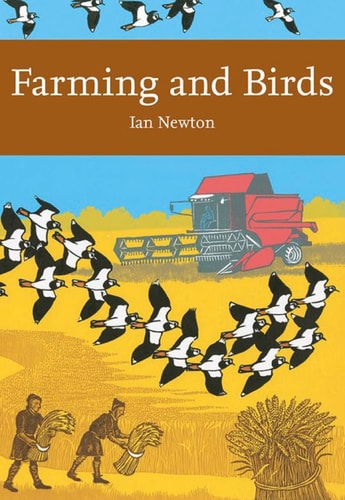
Farming and Birds
0
0
As an Amazon Associate and affiliate partner, Menrva Books earns from qualifying purchases. Learn more
Author Description
Given the underlying topography, the scenery over most of Britain has been created largely by human activities. Over the centuries, landscapes have been continually modified as human needs and desires have changed. Each major change in land use has brought changes to the native plants and animals, continually altering the distribution and abundance of species. This is apparent from the changes in vegetation and animal populations that were documented in historical times, but even more so in those that have occurred since the Second World War. More than seventy per cent of Britain's land surface is currently used for crop or livestock production, and in recent decades farming has experienced a major revolution. Not only has it become more thoroughly mechanised, it has also become heavily dependent on synthetic fertilisers and pesticides, and increasingly large-scale in its operation. These changes have brought crop yields and livestock production to levels previously considered unattainable. However, such high yields have been achieved only at huge financial and environmental costs. One of the most conspicuous, and best documented, consequences of modern agriculture has been a massive loss of wildlife, including birds. In this timely addition to the New Naturalist Library, Ian Newton discusses the changes that have occurred in British agriculture over the past seventy years, and the effects they have had on bird populations. He explains how different farming procedures have affected birds and other wildlife, and how an understanding of the processes involved could help in future conservation.
Menrva's Summary
THE THESIS
The transformation of British landscapes by agriculture has profoundly impacted bird populations, creating a critical need to understand these ecological shifts. Ian Newton, a distinguished ornithologist, examines the dramatic changes in British farming practices over the last seventy years, detailing how increased mechanization, synthetic fertilizers, and large-scale operations have led to significant wildlife loss. The book explores the direct effects of various farming procedures on bird species and other wildlife, drawing on historical data and contemporary observations. It aims to provide insights that can inform future conservation efforts and mitigate the environmental costs of modern agriculture.
THE SCOPE MAP
- Analysis of agricultural changes in Britain over the past seventy years.
- Detailed examination of the effects of modern farming on bird populations.
- Explanation of how specific farming procedures impact birds and other wildlife.
- Discussion of the role of synthetic fertilizers and pesticides in wildlife decline.
- Exploration of the relationship between land use, mechanization, and biodiversity.
- Consideration of historical changes in vegetation and animal populations.
- Insights into future conservation strategies based on ecological understanding.
THE AUTHORITY PERSPECTIVE
This timely addition to the New Naturalist Library is recognized for its comprehensive analysis of the intricate relationship between British agriculture and its avian inhabitants. Ian Newton's work is lauded for its detailed examination of how seventy years of agricultural revolution, marked by mechanization and chemical inputs, have reshaped wildlife distribution and abundance. The book is positioned as an essential resource for understanding the ecological consequences of modern farming and for informing future conservation strategies. It effectively bridges the gap between agricultural science and ornithological study, offering a clear perspective on the environmental costs of high-yield farming.
Page Count:
628
Publication Date:
2017-01-01
Publisher:
William Collins
ISBN-10:
0008147906
ISBN-13:
9780008147907
Nature
Non-Fiction
Science
Birds
Nature
Regional
Agriculture
Technology & Engineering
Conservation
British Wildlife
Animals
Insects & spiders
Ecology
Community Tags
Similar Books