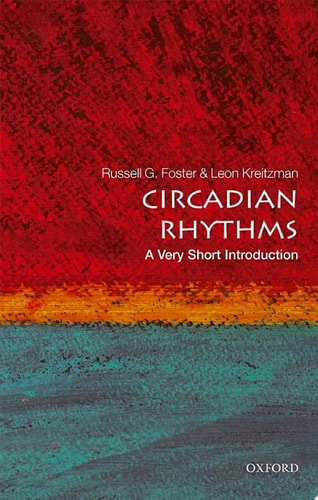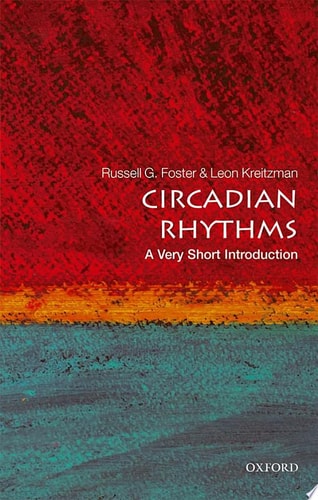
Circadian Rhythms: A Very Short Introduction
0
0
As an Amazon Associate and affiliate partner, Menrva Books earns from qualifying purchases. Learn more
Author Description
The Earth's Daily Rotation Affects Just About Every Living Creature. From Dawn Through To Dusk, There Are Changes In Light, Temperature, Humidity, And Rainfall. However, These Changes Are Regular, Rhythmic And, Therefore, Predictable. Thus, The Near 24 Hour Circadian Rhythm Is Innate: A Genetically Programmed Clock That Essentially Ticks Of Its Own Accord. This Very Short Introduction Explains How Organisms Can Know The Time And Reveals What We Now Understand Of The Nature And Operation Of Chronobiological Processes. Covering Variables Such As Light, The Metabolism, Human Health, And The Seasons, Foster And Kreitzman Illustrate How Jet Lag And Shift Work Can Impact On Human Well-being, And Consider Circadian Rhythms Alongside A Wide Range Of Disorders, From Schizophrenia To Obesity. About The Series: The Very Short Introductions Series From Oxford University Press Contains Hundreds Of Titles In Almost Every Subject Area. These Pocket-sized Books Are The Perfect Way To Get Ahead In A New Subject Quickly. Our Expert Authors Combine Facts, Analysis, Perspective, New Ideas, And Enthusiasm To Make Interesting And Challenging Topics Highly Readable.
Menrva's Summary
THE THESIS
This book investigates the biological mechanisms of the near 24-hour circadian rhythm and how these innate clocks influence the health and behavior of living organisms. Authors Russell Foster and Leon Kreitzman, both experts in the field of chronobiology, synthesize current scientific understanding of how organisms track time. They present a framework that connects genetic programming to environmental variables, illustrating the profound impact of these internal clocks on human physiology and pathology.
THE SCOPE MAP
What You Will Find
- Biological mechanisms of the circadian clock and its genetic basis
- Analysis of environmental variables including light, temperature, and seasonal changes
- Examination of health implications such as jet lag, shift work, obesity, and mental health disorders
Scope Limits
- The text does not provide an exhaustive clinical manual for treating specific sleep disorders
- It does not cover the entire history of biological timekeeping research in granular detail
THE AUTHORITY PERSPECTIVE
Experts and readers frequently cite this work as a highly accessible and concise entry point into the complex field of chronobiology. The text is noted for its ability to distill dense scientific research into a format suitable for students and interested laypeople alike.
Page Count:
144
Publication Date:
2017-01-01
Publisher:
Oxford University Press
ISBN-10:
0191027464
ISBN-13:
9780191027468
Non-Fiction
Science
Health
Biology
Chronobiology